
Are you looking for skin rejuvenation and revitalization treatments? If yes, you must have come across chemical peels and carbon peels. After all, both treatments effectively address many skin issues like acne scars, discoloration, or dull skin. While they are safe and effective treatments, they differ in their methods, downtime, and results. So, which treatment is better for you? Read this guide to find out.
What is a Carbon Laser Peel Treatment?
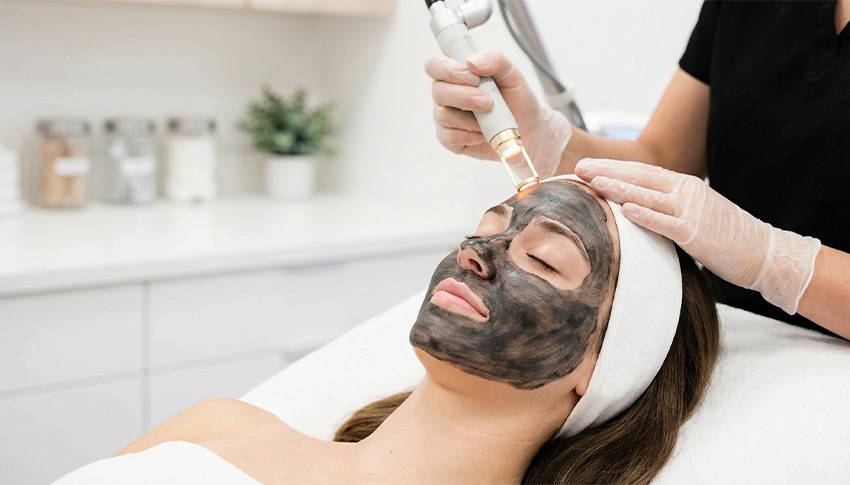
Carbon peels deeply exfoliate your skin and encourage the formation of collagen. For those with oily skin or clogged or enlarged pores, carbon peels are perfect. A carbon cream mask will be applied to your face prior to the laser treatment in the carbon peel. The carbon cream mask will be broken down by the light beams during the laser treatment, causing the carbon particles to erupt and deeply exfoliate your skin while absorbing all the impurities.
What is a Chemical Peel?
In a chemical peel, a chemical solution will be applied to your face for some time before it is washed off thoroughly. It will exfoliate the upper layer of your skin and leave you with fresh, youthful, and shining skin. Depending on your age, the severity of your skin problems, and your personal preferences, you can select between superficial, medium, or deep chemical peels.
Light chemical peel: Addresses minor skin problems such as uneven texture, light acne scars, and fine wrinkles.
Medium chemical peel: Reduces pigmentation, UV damage, and acne inflammation
Deep chemical peel: Addresses more advanced indications of aging, deep wrinkles, and persistent discoloration.
Differences in Chemical Peels and Carbon Laser Peels
Here are some common differences between chemical peels and laser peels.
Method
While both carbon and chemical peels seek to improve texture and exfoliate the skin, their methods are very different. Applying a thin layer of liquid carbon to the face will be the first step in a carbon peel. This carbon adheres to oil and contaminants after penetrating deeply into the pores. The carbon particles will be heated and burst by passing a laser over the skin. As the carbon evaporates, it clears clogged pores, eliminates accumulated debris, and gently resurfaces the skin. Simultaneously, the laser burns the skin’s deeper layers, increasing stiffness and promoting the creation of collagen. On the other hand, acids are used in chemical peels to break the connections that hold dead skin cells together. This causes the outer, damaged layers to shine through controlled exfoliation.
Results
Because they require little to no downtime, carbon peels are referred to as “lunchtime peels.” Following treatment, there is no peeling, flaking, or soreness, but the skin might look slightly pink for a few hours. Immediately brighter skin, less oiliness, clean pores, and milder acne control are among the outcomes. Nevertheless, the effects are transient, usually lasting two to four weeks. For long-term texture or oil regulation improvement, several treatments are typically advised.
Depending on the depth of the peel, chemical peels have different downtimes. For one to three days, superficial peels result in modest flaking and slight redness. Medium peels, such as TCA, require meticulous aftercare because they induce noticeable peeling that lasts for five to seven days. Although deep peels require weeks of recuperation and rigorous peeling, the results are transformative. Compared to carbon peels, chemical peels considerably improve fine wrinkles, scars, and pigmentation over a longer period of time. As a trade-off, they require extra sun protection, patience, and treatment.
Suitability
The appropriateness of carbon and chemical peels depends on your objectives and skin type because they address different levels of skin issues. Blackheads, enlarged pores, mild acne, greasy skin, and dullness are the optimal conditions for carbon peels. Nearly all skin tones and delicate skin types can safely utilize the laser because it absorbs carbon rather than skin color. For those seeking mild treatment with immediate brightness and no chance of discomfort, carbon peels are perfect. With repeated sessions, they provide modest, imperceptible improvements.
However, chemical peels are versatile because they are available in superficial, medium, and deep strengths. They address sun damage, coloration, melasma, uneven tone, textured skin, fine wrinkles, roughness, and acne scars. Deep or medium peels can significantly improve skin, particularly in cases with hyperpigmentation and age issues. However, they need to be evaluated by a professional because, if used improperly, certain acids can cause post-inflammatory hyperpigmentation on darker skin.
Thus, chemical peel and carbon peel treatments are safe and effective procedures. However, to choose the best treatment for yourself, think about your skin type and the specific problems you want to address.