
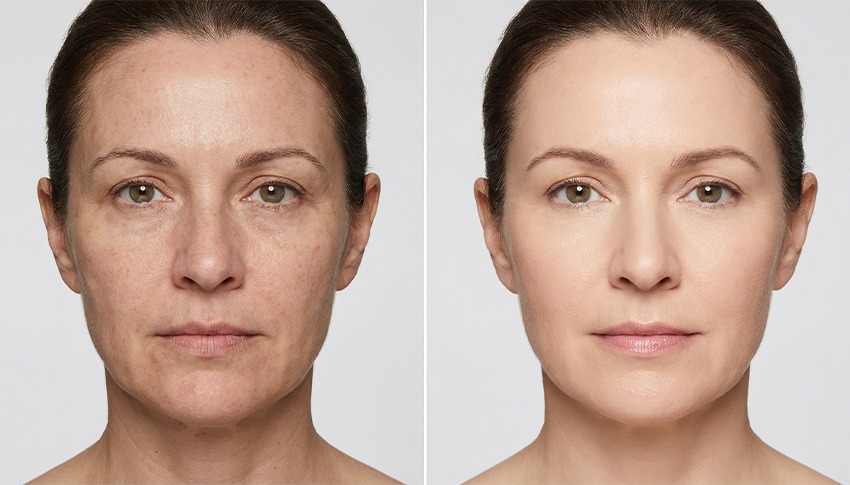
Our skin gets exposed to external environmental factors like sunlight, pollution, and various irritants every day. As a result, these exposures have a significant impact on our skin health and appearance. In fact, we may even face various skin concerns, including premature aging, sun damage, dryness, irritation, acne, scarring, and pigmentation. This makes it vital to take care of your skin. And for that, you can think about getting a superficial chemical peel.
Continue reading to learn more about chemical peels.
What is a Superficial Chemical Peel?
The mildest kind of chemical peel is a superficial one. By promoting fresh cell turnover and revealing a smoother surface, it acts on the skin’s outermost layer. Because of this, it’s an excellent choice if you desire noticeable improvement without a lengthy recuperation period. Although they can treat more serious skin issues, medium and deep peels penetrate deeper and take longer to heal. In contrast, superficial chemical peels are easy to use, reproducible, and safe for the majority of skin types. The majority of patients find them to be a convenient way to revitalize their skin without interfering with their daily activities.
Phases of a Superficial Chemical Peel
Your skin goes through natural stages of rejuvenation following a superficial chemical peel. The majority of patients had the following experiences:
Peeling Starts: The skin’s outer layer begins to loosen within a day or two. Usually, this appears less like severe peeling and more like mild dryness.
Surface Renewal: New, healthier skin emerges as the old cells are lost. Tightness or redness may show up, but they go away fast with sunscreen and moisturizer.
Healing Phase: The skin continues to heal throughout the course of the following several days. The surface becomes more even and renewed as any peeling superficial alterations disappear.
Visible Results: Skin appears more polished, brighter, and clearer at the end of the first week. Many patients report that their skin feels refreshed and makeup applies more effortlessly.
What to Anticipate from a Superficial Chemical Peel?
A superficial peel is easy to accommodate into your schedule, quick, and straightforward. What to anticipate from a superficial peel procedure is as follows:
The Consultation
The treatment will begin with a one-on-one meeting. After reviewing your skin history and listening to your goals, your doctor will determine whether a superficial peel is the right course of action.
The Process
About 20 to 30 minutes are needed for the treatment. Following cleaning, the peel solution is administered, closely watched, and either neutralized or eliminated. The majority of patients explain the feeling.
Recuperation & Aftercare
For a few days, you might notice some redness or minor flaking, but it won’t affect day-to-day activities. Your results show up quickly and get better over the course of the week if you take care of them properly.
Potential Side Effects of Superficial Chemical Peels
- Compared to medium-depth or deep chemical peels, superficial chemical peels are the gentlest, thus you are less likely to have a negative reaction.
- You might get blotchy skin or a minor white discoloration in some places, but this should go away in a few hours.
- Peeling may occur for two to four days following your therapy.
- If you are prone to cold sores, a chemical peel may trigger an outbreak. Taking an antiviral medication as prescribed by your doctor in advance may help prevent this.
- Although redness normally goes away with time, skin redness can occasionally last longer than two to three months.
- All peels have the potential to cause hyperpigmentation, or brown spots on the skin, particularly if you have darker skin. It’s crucial to apply creams according to your practitioner’s instructions to lower the likelihood of this. A high-factor sunscreen should be used every day as part of this.
Who Should Get a Superficial Chemical Peel?
The best candidates for a superficial chemical peel are those who want to get rid of acne, uneven skin tone or texture, or minor fine lines or wrinkles. Dark skin tones can safely undergo superficial chemical peels; however, the risk of hypopigmentation may be increased. People with open wounds, sunburns, or active skin infections shouldn’t get superficial chemical peels.
What is the Typical Superficial Chemical Peel Recovery?
After a superficial chemical peel, downtime is minimal to nonexistent. Dryness, peeling, and minimal skin erythema (redness) normally go away in a few days. After therapy, the majority of candidates resume their regular activities right away.