
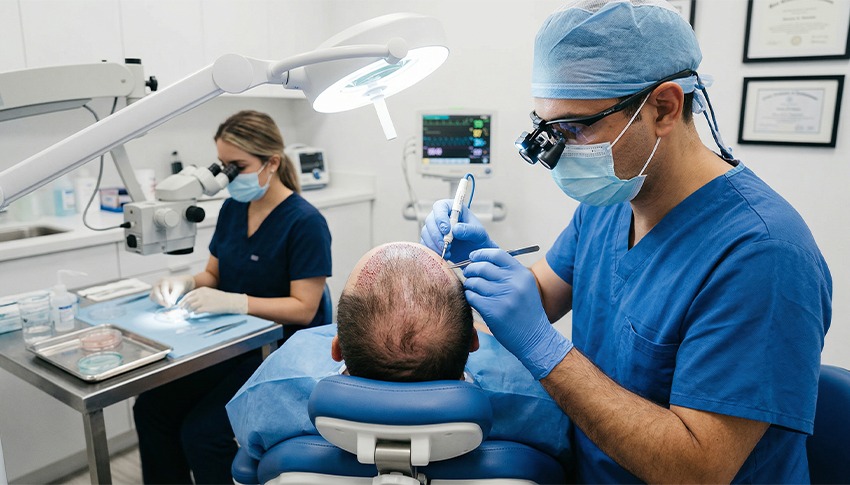
Are you thinking about getting a hair transplant? One question you’ve undoubtedly been thinking about a lot may be, “How long does a hair transplant last?” In addition to replacing lost hair, the long-term goal of a hair transplant procedure is to encourage the growth of new hair. Compared to other hair restoration methods, hair transplants’ results last for years.
Here’s what you need to know about hair transplant results and longevity.
Factors That Affect How Long Your Hair Transplant Will Last
Although the hair transplant is permanent, a number of important factors affect both the final cosmetic outcome and its longevity. A well-informed patient and an experienced surgical team working together will result in a favorable outcome.
Graft Survival Rate: FUT vs. FUE
Follicular Unit Transplantation (FUT) and Follicular Unit Extraction (FUE) are the two main techniques for harvesting grafts.
- FUT (Strip Surgery): The donor area is stripped of hair-bearing skin. Under a microscope, technicians then separate this strip into individual follicular units. Longer hair can cover up the linear scar left by this technique.
- FUE: Using a micro-punch tool, individual follicular units are removed one at a time directly from the scalp, leaving behind small, often invisible scars that resemble dots.
The goal of both methods is to produce long-lasting effects. Because of the controlled dissection procedure, FUT was regarded as the “gold standard” for graft survival for many years. However, this gap has mostly been addressed with two developments in FUE technology and technique. Comparable, or even marginally higher, survival rates for FUE when carried out by a qualified specialist have been reported in several cases.
The expertise and surgical methods of the specialist
Perhaps the most important factor is your specialist’s and their technical team’s experience. Precision and artistry are necessary for a successful transplant. A knowledgeable group guarantees:
- Minimal Graft Trauma: Grafts, or hair follicles, are fragile living tissues. According to research, graft life depends critically on careful handling, enough hydration, and regulated temperature throughout the process.
- Correct Placement: The ultimate appearance’s naturalness depends on the implanted grafts’ density, angle, and orientation. A knowledgeable expert creates a hairline that will look natural as you get older, in addition to being attractive today.
Your Lifestyle and Health Practices
The capacity of your body to repair itself and promote the growth of new hair is essential. Some lifestyle decisions can have a big impact on how long your transplant lasts:
- Alcohol and smoking both narrow blood arteries, which lowers blood flow to the scalp. This may hamper the fragile new grafts’ ability to recover and receive vital nutrients.
- Healthy hair development requires a well-balanced diet full of vitamins and minerals. Both native and transplanted hair might suffer from deficiencies.
- The cycle of hair growth can be adversely affected by prolonged high levels of stress.
Your Donor Hair’s Quality
The raw components are also essential to the success of a transplant. The ideal applicant has thick, robust hair follicles and a dense, stable donor area. A comprehensive assessment of the patient is essential. The long-term result may be affected by elements like fine hair, low density in the donor zone, or indications that the donor area itself is starting to thin (miniaturization). A professional doctor will evaluate this and establish reasonable expectations.
The Recovery Timeline for Hair Transplants
After a hair transplant, patience is essential. The final outcomes take several months to manifest.
- The transplanted hairs will shed throughout the first two to three weeks. This is called “shock loss,” and it is a typical and anticipated aspect of the process.
- After three to four months, the transplanted follicles will start to produce new, fine hairs.
- 6–9 Months: You’ll see a dramatic increase in density and substantial growth. By this point, most people see roughly 60% of new growth.
- After 12 to 18 months, the outcome is apparent. The hair will have grown to its full length, matured, thickened, and blended in with your natural hair.
- The visual journey of a hair transplant begins from the beginning state of hair loss to the immediate post-procedure period to the final, dense outcome.
How to Maintain Long-Term Results?
Long-term care helps preserve the health of both your new and old hair after the initial healing process is complete.
- Use gentle products: Choose shampoos that are light and free of sulfates.
- Steer clear of harsh chemicals: Consult your clinic beforehand and wait at least a few months before dying your hair or using any other chemical treatments.
- Keep up a good Lifestyle: Stress reduction, proper diet, and adequate hydration will sustain good hair for many years to come.