
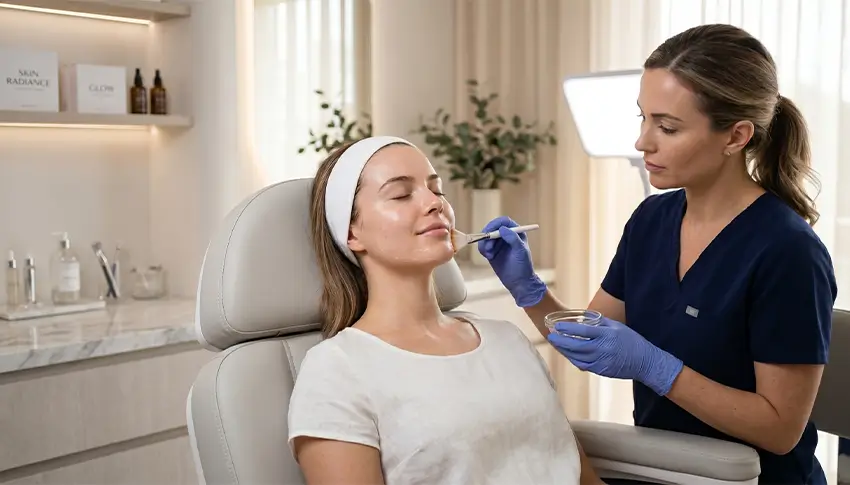
Do you want glowing and smooth skin? Don’t worry, you don’t have to always put yourself under aggressive treatments to see results. Cosmetic treatment known as superficial chemical peel has become increasingly popular as a way of enhancing your complexion through non-invasive procedures. Superficial peels use gentle methods to treat the outer layer of the skin, and they can be used to address a variety of skin care issues, such as flakiness, uneven pigmentation, and aging signs.
If you want to learn more about superficial chemical peels, read this guide.
What Are Superficial Chemical Peels?
The least intrusive type of chemical peel and a non-surgical method of skin resurfacing is the superficial chemical peel. Most skin types can safely use this kind of peel. In a superficial chemical peel, the epidermis (top layer of skin) is penetrated by chemical solutions that frequently contain alpha-hydroxy acids (AHAs) and beta-hydroxy acids (BHAs), such as glycolic acid, lactic acid, and/or salicylic acid.
Chemical peels that are superficial can be used alone or as a pre-treatment for chemical peels that are deep or medium depth. In addition to improving the look of sun damage, scars, brown spots, age spots, blotchiness, and other symptoms of aging, a superficial chemical peel can give skin a more youthful texture or tone.
Benefits of Superficial Chemical Peels
- Rough skin, slight discoloration, and acne scars can all be effectively treated with superficial peels. It is also helpful in repairing minor skin damage brought on by sun exposure. Superficial peels are ideal for gently revitalizing the skin.
- Mild acids are used in the procedure, which is quite successful in brightening the skin. It can even out the texture of the skin and make it look better.
- After applying moderate acids, the skin normally recovers in a week or less. After your superficial peel treatment, you can apply makeup within a day or two.
- The short recovery time of the superficial chemical peel treatment is one of its main advantages. One of the reasons superficial peels are referred to as the “lunchtime peel” is because they don’t require any downtime, unlike other, more intensive acid procedures.
Who Should and Shouldn’t Get Superficial Chemical Peels?
All skin types and tones can safely and effectively benefit from superficial chemical peels. A superficial chemical peel might be beneficial if you have uneven skin, fine wrinkles, sun damage, or pimples.
Although they are most frequently applied to the face, they are also an excellent choice for people who are prone to acne on their back and chest. They can be applied anywhere on the body, neck, and face.
They are accustomed to:
- Smooth skin
- Minimize imperfections
- Diminish pigmentation
- Diminish the visibility of fine lines
- Make age spots look better
- Minimize the visibility of acne scars
A chemical peel might not be appropriate for you if you:
- Have a history of skin scarring, especially keloid scarring; are pregnant or nursing; or have certain skin pigment concerns, lesions, or moles. A dermatologist or general practitioner must first examine these.
- Possess facial warts or a facial skin infection; have used prescription acne medications like isotretinoin; have darkly pigmented skin (because of the increased risk of hyperpigmentation).
- Have received any other abrasive treatment, including at-home care procedures; have recently shaved, waxed, or exfoliated the area.
What Should You Do After Superficial Chemical Peels?
- Following a peel treatment, it is crucial that you closely adhere to your practitioner’s instructions in order to maximize the procedure’s benefits and lower the possibility of issues or adverse effects.
- After your chemical peel treatment, gently wash your face with a soap-free cleanser and pat dry with a towel. Make sure your skin is adequately moisturized.
- You might notice peeling two to four days following your treatment, although not everyone does. Avoid picking or peeling your skin. You run the danger of bleeding, discoloration, and possibly scarring if you do.
- After treatment, use a high-SPF sunscreen for at least six weeks. This will lessen the likelihood that your skin will develop brown spots, called hyperpigmentation.
Potential Side Effects
- Compared to medium-depth or deep chemical peels, superficial chemical peels are the gentlest, thus you are less likely to have a negative reaction.
- You might have blotchy skin or a minor white discoloration in some places, but this should go away in a few hours.
- Peeling may occur for two to four days following your therapy.
- All peels have the potential to cause hyperpigmentation, or brown spots on the skin, particularly if you have darker skin. It’s crucial to apply creams according to your practitioner’s instructions to lower the likelihood of this. A high-factor sunscreen should be used every day as part of this.