
Are you struggling with severe knee pain? Knee pain may begin slowly; a little stiffness after a long walk, a pang when you get up, or perhaps some persistent swelling. But with time, these small pains may grow into long-term problems that have a big influence on your day-to-day activities. However, people often hesitate to get knee pain treatments as they find them intimidating and scary. But there’s nothing to be scared of knee pain treatments!
Continue reading to learn more about knee pain treatment.
What Causes Knee Pain?
Various factors, from simple traumas to long-term joint disorders, can cause knee pain.
- Minor injuries: Muscle strains, sprains, and overuse during daily activities or exercise might result in brief discomfort.
- Structural injuries: Cartilage deterioration, meniscus tears, and ligament injuries (ACL, MCL) can cause persistent issues.
- Knee discomfort frequently gets better with rest, ice, and easy home remedies. However, it’s time to get medical assistance if the discomfort continues or gets worse.
- Chronic conditions: Osteoarthritis, arthritis, and other degenerative disorders can cause progressive joint degeneration.
Knee Pain Treatments
The following therapies may be used by your physical therapist to aid in your recovery from minor or severe knee injuries:
- Therapeutic exercises: During your healing process, therapeutic exercises can improve blood flow and circulation. Additionally, they can help you avoid re-injury, strengthen your leg muscles, and increase your range of motion.
- Therapeutic stretching: This technique can improve flexibility and range of motion while also reducing the risk of reinjury. During treatments, your therapist could lead you through stretches and exercises or provide you with directions for at-home workouts.
- Soft tissue manipulation: Your physical therapist will use their hands to do mild, massage-like movements in order to deliver soft tissue manipulation or manual treatment. This will assist them in releasing stiffness caused by edema or recently healed tissue.
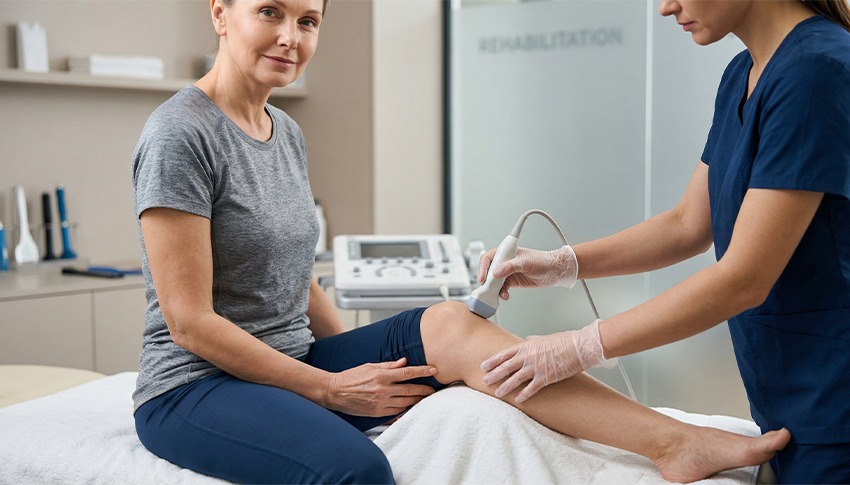
- Ultrasound: Ultrasound is a technique for delivering heat to specific regions located deep within soft tissue. An ultrasound wand will be used by your physical therapist to reduce pain, improve blood flow, and encourage recovery.
Do You Need Knee Pain Treatment?
Here are some common signs you need knee pain treatment.
- Restricted Mobility: You may have advanced joint problems if you have trouble bending, straightening, or rotating your knee. One of the most obvious indicators that you require knee pain treatment is if you find yourself avoiding stairs, having trouble getting in and out of chairs, or restricting your activities.
- Persistent Swelling: Swelling can occur occasionally, particularly after physical exercise. On the other hand, persistent inflammation or joint injury may be indicated if your knee swells despite rest and ice.
- Hearing Popping Noises: Crepitus, another name for a grinding feeling, may indicate a lack of cartilage. Frequent popping, crunching, or clicking noises could be a sign that knee pain treatment is necessary.
- Persistent, Unrelenting Pain: It’s a clear sign that something more severe is happening if your knee pain persists in spite of rest, medication, and physical therapy. If persistent pain persists for more than a few months, there may be underlying structural damage.
- Bone-on-Bone Contact: One of the clear indicators that you require knee pain treatment is an X-ray that shows your knee joint has completely lost cartilage and now shows bone-on-bone contact. Usually, this leads to excruciating pain and restricted movement.
- Instability of the Knee: Does your knee ever feel unsteady or give out? This instability may be a sign of severe arthritis or ligament damage, both of which might cause more harm if suitable knee pain treatment is not received.
What Happens During a Consultation Visit?
The following will probably be covered in your initial consultation:
- A physical examination to evaluate pain response, stability, and range of motion.
- Imaging tests to assess cartilage, bone structure, and alignment include MRIs and X-rays.
- A review of your medical history, including past injuries, therapies, and lifestyle
- Investigation of nonsurgical options, unless you’ve had a lot of experience with them
- An open discussion about expectations for recovery, dangers, and results
Don’t be scared to bring questions with you. Inquire about the many surgical options, the length of recuperation, and how the procedure might enhance your daily life. Your surgeon will assist you in determining whether it is appropriate to proceed if there are multiple indications that you require knee surgery.