
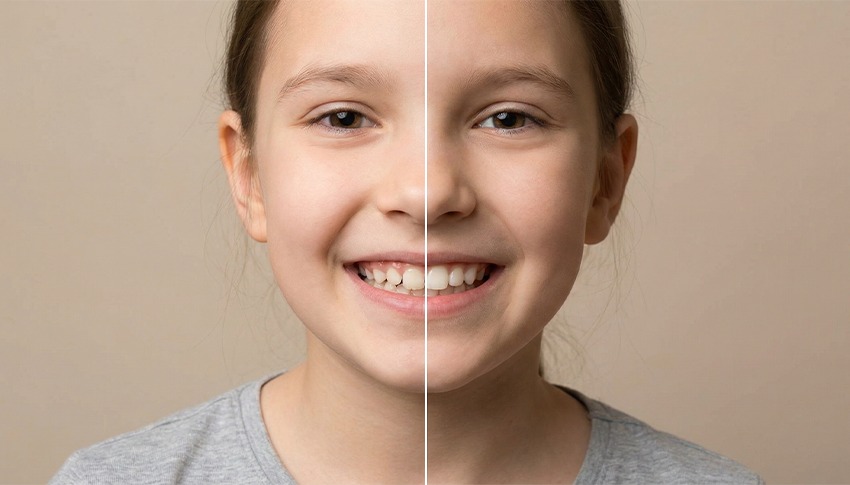
No one likes to see themselves with crooked teeth every time they smile or look in the mirror, right? This may not just kill your confidence but also lead to so many other dental problems, like difficulty in chewing or putting extra strain on your jaw. But here’s the good news: you don’t have to deal with these problems anymore by getting teeth braces! Teeth braces are a common orthodontic device to fix misaligned or crooked teeth. Teeth braces are an efficient way for individuals of all ages to fix their teeth alignment!
If you want to learn more about teeth braces, continue reading.
When Is It the Right Time to Get Teeth Braces?
Here are some signs you should get teeth braces.
Sign # 1
Are there any apparent spaces between your teeth? Permanent teeth will fill in the gaps if you’re still young. However, if you still have gaps between your permanent teeth, it might be time to schedule an orthodontic consultation. Your smile will look better, and your dental health will improve as a result of the braces closing the gaps in your teeth.
Sign # 2
Having too many teeth is also a problem. There might not be enough space in their mouth to accommodate all of your teeth when your permanent teeth erupt. Your teeth may grow at strange angles as a result of improper tooth development. Other adverse effects of crowded teeth include lisp development and trouble biting. And for this, braces are helpful. The teeth will be pushed into the proper place by the metal wires and straps. Additionally, your child’s teeth will seem straighter. In addition, the braces help fix overbite and underbite problems brought on by crowded teeth.
Sign # 3
Are you a mouth breather? If so, you might eventually require braces. Your face shape may become problematic if you breathe continuously through your mouth. Your jaw may become too narrow as a result, leaving little room for your permanent teeth, which could affect how your permanent teeth erupt. Other issues with your oral health, like increased tooth decay, are brought on by mouth breathing. It’s crucial that you go to the dentist frequently if you breathe through your mouth.
Sign # 4
As the permanent teeth erupt underneath, the baby’s teeth naturally fall out through resorption. Several orthodontic issues arise if these teeth fall out too soon or too late. This leads to verbal problems, thumb sucking, and canine disruption. Thus, if you’ve experienced early or late loss of a baby, visit a dentist to see if you need braces.
Are There Different Types of Braces?
Yes, there are several types of braces. Here are some types of oral braces.
Metal Teeth Braces
Traditional metal braces may be the first thing that comes to mind when you think of braces. Stainless steel wires, brackets, and bands are used in metal braces to gradually move your teeth. When you grin, your metal braces are apparent. To make your braces less obvious, you might select ligatures that are tooth-colored or transparent. Alternatively, you can select ligatures with vibrant colors if you’re feeling festive.
Ceramic Braces
The transparent or tooth-colored ceramic brackets used in these braces mix astonishingly well with the color of your natural teeth. Their less noticeable appearance makes them popular among image-conscious teens and adults, even though they work similarly to metal braces—using brackets affixed to teeth with an archwire to guide movement. Unlike removable aligners, ceramic braces function continuously and don’t depend on patient compliance, which may lead to more consistent outcomes. Moreover, after your orthodontist approves treatment, ceramic braces can frequently be installed right away, in contrast to some aligner systems that need digital planning before starting.
Lingual Braces
For patients seeking orthodontic treatment that is both successful and completely invisible, lingual braces are the best option. Lingual braces are specifically fitted to the inner surface of your teeth, the side that faces your tongue, in contrast to all other forms of braces, which are applied to the front surface of teeth. They are totally undetectable to others due to their positioning, even in close quarters or in pictures. To guarantee that they properly fit the distinctive shapes of your lingual (tongue-side) tooth surfaces, each bracket is created to order using digital impressions of your teeth. This ground-breaking method eliminates the main disadvantage of conventional braces, visibility, while retaining their mechanical benefits.