
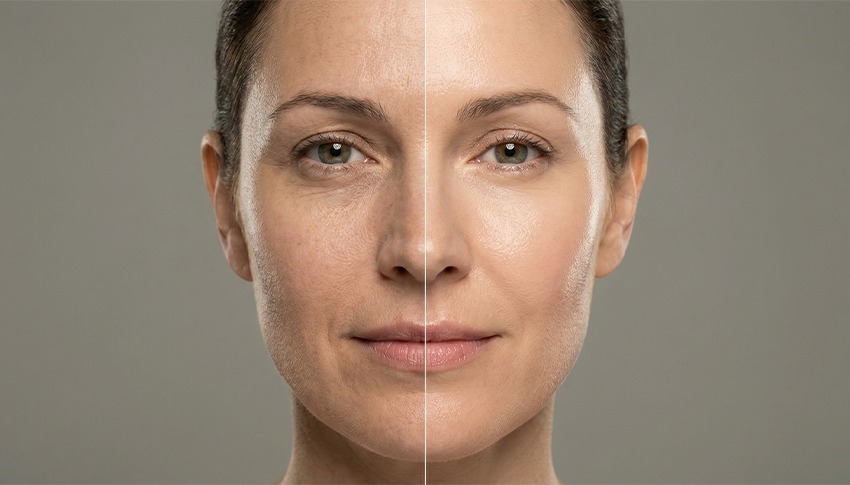
Do you ever stand in front of the mirror and wonder if it’s time to advance in your skincare journey? If yes, chemical peels may be the right choice! Chemical peels are a common cosmetic procedure. In order to exfoliate and remove the outer layers of damaged and dead skin cells, a chemical solution is applied to the skin. Many skin issues, including acne, sun damage, age spots, wrinkles, fine lines, and uneven skin tone and texture, can be treated with chemical peels. Within just a session, your skin will look fresher, brighter, and smoother.
If you’re still unsure about chemical peels, here are some common signs you may be a good candidate for chemical peels.
Inconsistent Skin Tone
By eliminating the outer layer of damaged and dead skin cells, chemical peels can help even out the tone of the skin. This can lessen the visibility of dark spots, hyperpigmentation, and other skin discolorations.
Wrinkles and Fine Lines
Chemical peels function by encouraging the skin to produce more collagen. The protein that provides skin its suppleness and firmness is called collagen. Chemical peels can help minimize the appearance of wrinkles and fine lines on the hands, neck, and face by boosting the production of collagen.
Sun Damage
Sun damage can result in freckles, black patches, and other skin discolorations. Chemical peels can lessen the visibility of these imperfections and enhance the skin’s general tone and texture by removing the outer layer of damaged skin cells.
Dull Skin
Chemical peels can enhance the skin’s texture and give it a radiant, healthy appearance. Chemical peels can reveal new skin beneath the outer layer of dead and damaged skin cells, giving the skin a more radiant and brilliant appearance.
Age Spots
Age spots, sometimes referred to as liver spots, are regions of hyperpigmentation brought on by aging or sun exposure. Chemical peels can help to diminish the appearance of age spots by eliminating the outer layer of damaged skin cells and fostering the creation of new, healthy cells. Age spots may be successfully treated using a chemical peel that contains glycolic acid and trichloroacetic acid (TCA)
Acne and Scars from Acne
By exfoliating the skin and clearing clogged pores, chemical peels can help lessen the look of acne and the scars it leaves behind. This can lessen the look of imperfections and stop breakouts in the future.
Uneven Texture of the Skin
Chemical peels can assist in enhancing the general texture of the skin by smoothing out rough spots and minimizing the appearance of fine lines and wrinkles. Uneven skin texture can be effectively treated with a chemical peel that combines TCA and AHAs.
Melasma
Dark areas on the skin, typically on the face, are a symptom of melasma. By exfoliating the skin and lowering the synthesis of melanin, the pigment that gives skin its color, chemical peels can help lessen the appearance of melasma. Melasma can be treated with a chemical peel that contains hydroquinone and TCA.
Rough Skin Texture
Chemical peels can assist in enhancing the texture of the skin by eliminating the outer layer of dead and damaged skin cells. The skin may feel softer and smoother to the touch as a result. Rough skin texture can be effectively treated with a chemical peel containing beta hydroxy acids (BHAs) or alpha hydroxy acids (AHAs).
Oily Skin
By eliminating extra oil and clearing clogged pores, chemical peels can help regulate the skin’s oil production. This can lessen the appearance of enlarged pores and help prevent outbreaks. Chemical peels for oily skin frequently use salicylic acid and glycolic acid.
How Do Chemical Peels Work?
Chemical peels can be applied to the hands, face, neck, chest, and other parts of the body. Depending on how deeply they penetrate the skin, they can be categorized. Superficial peels, sometimes referred to as light or lunchtime peels, are intended to enhance the look of slight skin discoloration and rough texture. They merely penetrate the skin’s outermost layer. Medium-depth peels dig deeper into the skin to address mild sun damage, fine wrinkles, and acne scars. Deep peels are used to treat severe sun damage, deep wrinkles, and scars because they reach the skin’s deepest layers.
The skin may be irritated, flaky, and red for a few days or weeks following a chemical peel. It is crucial to protect the skin from sun exposure during the healing process and to follow any advice given by a dermatologist after the procedure.