
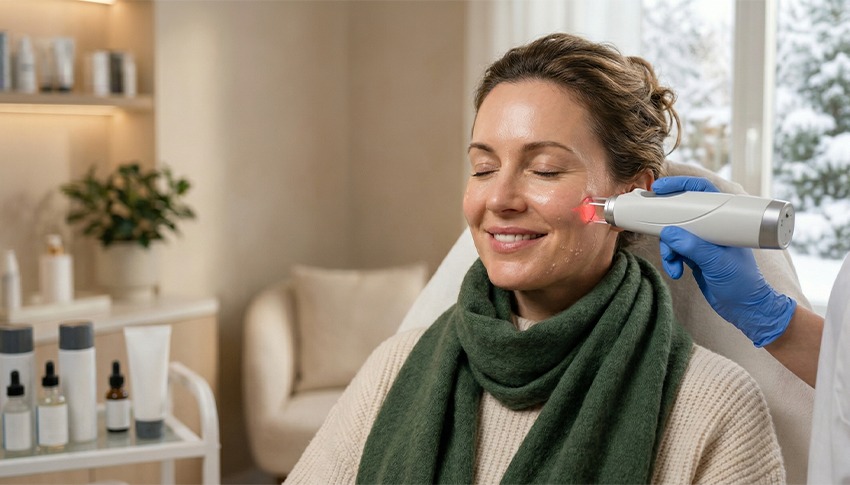
Indeed, winter is about warm clothes, hot chocolate and cozy nights. But that’s not all! Winter is also the ideal season to rejuvenate and revitalize your skin. Cosmetic treatments like chemical peels, laser therapy, and CO2 resurfacing are safer when the weather is cooler and there is less chance of dark patches or discomfort.
Thus, this guide outlines everything you need to know about these treatments in winter.
Why Is Winter the Ideal Time of Year for Skin Treatments?
Many skin treatments work best in the winter, which makes healing easier and operations safer. Your skin is shielded from UV rays, which can otherwise cause irritation or pigmentation following treatments, thanks to shorter days and less intense sunlight.
Research indicates that when treatments are performed during months with little sun exposure, post-procedure pigmentation and inflammation are considerably reduced. Additionally, cooler temperatures assist soothe the skin, minimizing redness and swelling and maximizing the visibility of your results.
Why Is Managing Downtime Easier in the Winter?
Naturally, the brief recuperation period associated with skin treatments is easier to manage during the winter. Cooler weather, indoor activities, and fewer outdoor social gatherings allow your skin to repair in peace and quiet.
Research indicates that patients who are able to avoid the sun and wear protective clothes have an easier time recovering after procedures including chemical peels, laser therapy, and CO2 resurfacing.
Winter’s slower social calendar makes it simpler to take a few days for skin recovery, and layered clothes can assist covered areas. It’s usual to experience redness, peeling, or slight swelling throughout the healing process, and being able to stay warm indoors makes it easier for these side effects to dissipate. You can fully recuperate while maintaining control over your everyday routine if you schedule your treatments for the winter.
Laser Treatment
Winter is the greatest season to schedule laser treatments because they perform best when your skin isn’t exposed to the sun all the time. The cooler months promote safe skin healing and optimal treatment outcomes.
Targeted outcomes: When UV exposure is minimal, lasers more successfully enhance pigmentation, lessen redness, and smooth skin texture.
Faster, safer healing: Following treatment, there is less chance of irritation, sunburn, or inflammation in colder climates.
Long-term advantages: Preventing sun stress lowers the likelihood of problems and helps maintain consistent, long-lasting outcomes.
The precise targeting of problematic regions, such as dark spots, broken capillaries, or uneven skin texture, is how laser therapies operate. The skin is more sensitive after treatment and needs to be carefully shielded from UV radiation. Winter naturally lowers sun exposure, providing treated skin with the peaceful atmosphere it needs to heal completely. In addition to increasing safety, scheduling laser treatments during the winter months gives you skin that is smoother, more radiant, and more even-looking.
Chemical Peels
For more thorough chemical peels, winter is ideal because it provides your skin with the serene, low-UV environment it needs to heal safely. It is easier to regulate the healing process and fully benefit from deeper treatments during cooler months.
Medium to deep peels: These peels go beneath the skin’s surface, encouraging regulated exfoliation and boosting the creation of collagen for smoother, more radiant skin.
Decreased pigmentation risk: Less sun exposure reduces the likelihood of uneven coloring or post-peel dark patches.
Longer-lasting effects: Healing in a low-UV environment maximizes the peel’s effects and sustains skin gains over time.
By carefully eliminating layers of damaged skin, medium and deep chemical peels reveal new, revitalized skin underneath. Wintertime makes recuperation easier and safer because your skin is less likely to respond to heat or sunlight. You may give your skin the ideal conditions to heal, increase collagen, and produce more radiant, even-toned results by scheduling these treatments for the colder months.
CO2 Laser Resurfacing
Winter offers the safest and most healing environment for CO2 laser resurfacing, an intense procedure that can completely change your skin. Shorter days and less sun exposure give your skin the room it needs to heal completely and produce results that last.
Research indicates that when CO2 treatments are carried out during months with little UV exposure, post-procedure problems such as pigmentation changes or discomfort are considerably reduced.
In order to repair damaged skin layers, CO2 laser resurfacing stimulates the creation of collagen deep beneath the skin. Redness, peeling, and sensitivity are simpler to control during the cooler, low-UV winter months because healing can take a few days to several weeks.