
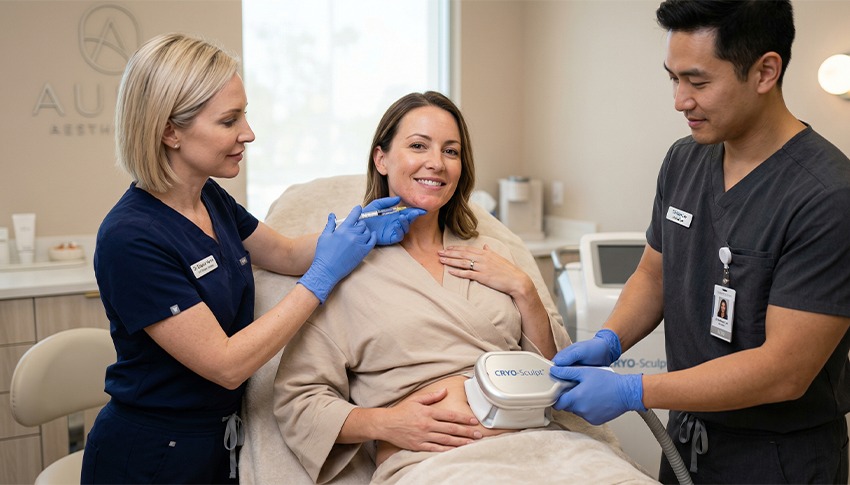
In 2026, fat reduction surgeries have become popular among individuals seeking to shape their bodies without having to take a leave or undergo invasive procedures. And the most discussed ones include weight loss injections and fat freezing. Both treatments are aimed at stubborn fat that is not responding to diet or exercise, but the mechanisms of action and the type of results they provide are very different. As a result, you may find yourself confused with the choice between the two, particularly when they are both being promoted as very effective. Even though effectiveness is not universal and varies based on factors like desired outcomes, area of treatment, etc., learning about the differences in both treatments can help you make an informed decision that will fulfill your aesthetic objectives and expectations.
Continue reading to learn more about weight loss injections and fat freezing.
Mechanism of Action of Weight Loss Injections
Weight loss injections, also called lipolytic injections, are intended to destroy fat cells in specific parts of the body. They are performed by injecting a special solution into the layer of fat, which interferes with the composition of the fat cells, making them deform. These dead cells are then slowly digested and excreted in the natural metabolic system of the body. The technique enables narrow targeting, which is suitable in small and localized regions like the chin, jaw line, or underarms. The procedure is very invasive, requiring several injections at a time. As the fat is eliminated by the body, it starts to become more sculpted and outlined, and the outcome starts to improve with each session.
How Does Fat Freezing Work?
Controlled cooling technology is the process of fat freezing or cryolipolysis, which involves destroying fat cells under the skin. In the process, a machine is used in the treatment section where the temperature is lowered to the extent that it freezes the fat cells without destroying the other tissues. These frozen fat cells are naturally broken down and are eliminated by the body over a period of several weeks. The therapy is entirely non-invasive, hence there are no needles or cuts required, so it can be attractive to people who want to have a more comfortable approach. Fat freezing works best in larger regions of the body, like the abdomen, thighs, or flanks, where a general reduction of fat is needed as opposed to specific sculpting.
Effectiveness and Results
Regarding effectiveness, the most important distinction is the nature of the results that each treatment produces. Weight loss injections are ideal for small, recalcitrant body fat and provide a more accurate shaping. They enable the doctors to target certain areas in a more controlled manner, which is perfect for defining faces or making small body alterations.
Fat freezing, on the other hand, is better in reducing fat in bigger parts of the body, as it produces a more uniform reduction as opposed to detailed sculpting. Both treatments permanently kill fat cells, but the apparent effect is contingent on the treatment regimen and adherence.
Speed, Convenience, and Sessions
The convenience and timing of treatment can also be a factor that makes one treatment option feel more effective. Weight loss injections normally take several sessions, separated by a few weeks, and the visible effect can be seen within a month or so of administration. Fat freezing, however, may need fewer sessions in each area, yet the results take longer to show, as long as three months or more. Although fat freezing can be more of a ‘set and wait ’ strategy, weight loss injections can bring about quicker first-time changes. Thus, the decision lies in whether you value speed or making fewer clinic visits.
Pain and Downtime
Comfort also contributes significantly to the determination of the treatment. Weight loss injections require several small injections, which may produce mild discomfort during the process. This is a temporary downtime that can take a few days, particularly when the visible part of the body, such as the face is undergoing treatment. Fat freezing, on the other hand, may be slightly more comfortable. Patients can experience high levels of coldness and mild pressure at the beginning of the session and during the session, but the area is usually numb, which will make the process more bearable. The downtime is minimal or absent, allowing you to continue with your everyday life as soon as possible.