
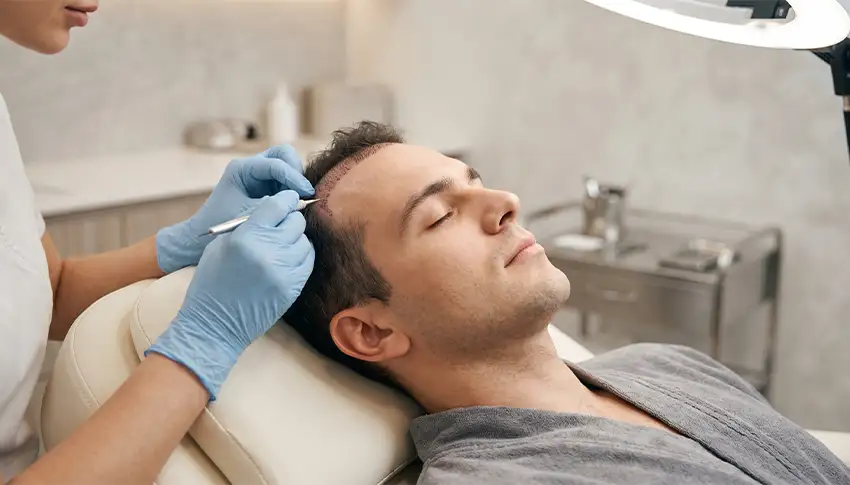
Hair loss may be an overwhelming experience, for both men and women, that often affects self-esteem and confidence. The good news is that there is a proven, long-term treatment for baldness and thinning hair called hair transplantation. However, it is crucial to have a thorough grasp of the procedure, its results, and post-transplant care before proceeding. And for that, it’s vital to ask your doctor crucial questions before getting the hair transplant.
Read this guide to learn more about the questions you must ask your doctor before a hair transplant.
When will the hair start to grow?
You will see a change after the procedure is finished. You will be able to see the new hair’s outline. Find out from the surgeon how long it will take for your hair to fully grow. This usually takes a year or so. However, because the hair will be growing, you will notice some improvement every day.
Am I too young to get a hair transplant?
The appropriateness of a hair transplant depends on a number of age-related factors. The current level of hair loss and the patient’s future hair loss trend must be taken into account by the surgeon. Some surgeons will decide not to do the hair transplant in order to stop additional hair loss or save the hair for younger patients. In order to decide whether to perform a hair transplant and permanently replace the lost hair, the surgeon may also decide to keep an eye on your pattern of hair loss.
How many grafts will I need?
The degree of hair loss, the intended result, the density of hair and skin laxity in the donor area, and the overall cost and viability of the treatment can all be better understood by asking this crucial question. It even aids in setting reasonable expectations and choosing the most effective hair transplant technique.
What is the breakdown of costs?
The reputation and location of the clinic, the surgeon’s and anesthesiologist’s fees, the type of hair transplant, the quantity of hair grafts needed, the complexity of the procedure, the preoperative evaluation, and follow-up appointments all affect the overall cost of a hair transplant procedure.
Will I have any more hair transplant sessions?
You might need to get another hair transplant if the hair doesn’t stabilize. Your surgeon can tell you a lot about future patterns of hair loss, so ask them about the extent of your hair loss. Younger patients will typically require a second hair transplant in the future. In the future, one might also need a hair transplant to boost their hair density.
Will the hair appear natural?
To guarantee that the hair is left appearing natural, the surgeon should use certain techniques. To get results that look natural, ask them if they will perform the hair transplant flawlessly. The FUE process is linked to grafting techniques that treat each hair follicle separately, resulting in hair that is dense and looks natural.
How should I get ready for the consultation?
Choose the best surgeon for consultation after doing some research. Bring a clean scalp for the inspection, be prepared with questions about hair transplants, and remember to bring vital information and medical records for the surgeon to review.
Which method do you suggest and why?
Traditional Follicular Unit Transplantation/Strip Method and Advanced Follicular Unit Extraction are the two primary hair transplant methods. There are benefits and cons to every strategy. During the appointment with the surgeon, it is crucial to know what will be appropriate and produce the desired results.
What kind of follow-up care is required after a hair transplant?
The surgeon may give instructions for the first two weeks after recuperation. This entails sleeping with the head raised, using a protective cap, refraining from touching, scraping, rubbing, or applying pressure to the scalp, getting enough sleep, maintaining proper hydration and health, abstaining from substance misuse, and maintaining an appropriate hair care regimen. Follow-up appointments at the designated intervals of three, six, nine, and twelve months should not be missed in order to track the healing and progress.
How does the recovery process work?
Long-term results depend on post-procedure upkeep. You must follow the washing guidelines, refrain from strenuous activity, and cover your scalp. There is very little swelling and scabbing, which normally disappears after a week. You can plan appropriately if you are aware of downtime.
How long do results last?
Since the hair was taken from resistant areas of loss, such as the back of the head, the implanted hair is permanent. However, long-term success will depend on maintaining the health of the entire scalp and following recommended treatments.