
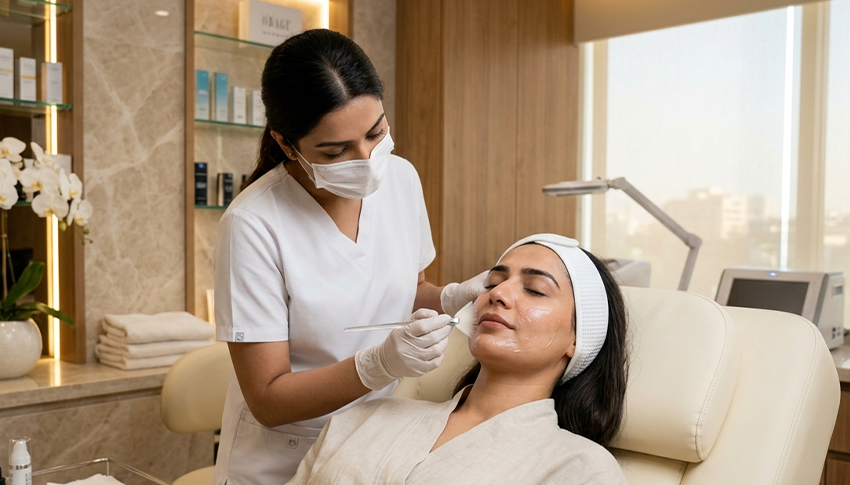
Chemical peels are one of the most well-known professional skincare procedures for enhancing skin texture, minimizing pigmentation, and rejuvenating a brighter complexion. They may be popular, but they’re not a one-size-fits-all remedy. Your skin type, problems, health history, and skincare habits will determine the right chemical peel for you. Some people get great results with little downtime, others may need a different treatment altogether. Before you schedule your first appointment, it’s important to fully comprehend what chemical peels can and can’t do. It is important to know if you are a good candidate to achieve better results and reduce the risk of frustration or complications.
Read this guide to find out whether chemical peels are right for you.
Think about your skin problems
Figure out what you want to improve. Chemical peels are often used to address dull skin, rough skin texture, uneven skin tone, moderate acne scars, sun damage and pigmentation and fine lines. They remove weakened outer layers of skin to bring fresh skin cells to the surface and promote natural skin renewal. But not all problems respond the same to a chemical peel.
Long-term wrinkles, severe acne scarring or noticeable skin laxity may not respond well to these treatments or may require a combined approach. Consider your primary goal prior to your consultation. If you want brighter skin, a smoother texture, or fewer blemishes, you can tell a skin specialist what you’re hoping to achieve, and they can recommend the treatment that has the best chance of delivering the results you want.
Find out your skin type
Knowing your skin type first is essential in understanding whether a chemical peel is right for you. People with oily or combination skin often benefit from certain peels that work minimize excess oil and clogged pores. Dry or sensitive skin can also be treated, but milder formulas may be suggested to avoid too much irritation. If you have sensitive skin, eczema, rosacea, or a tendency toward allergic reactions, your healthcare professional will take special care to determine whether a peel is appropriate for you or whether an alternative treatment might be safer. It’s also helpful to talk about your natural skin tone, as some peel strengths need extra care for darker skin tones to minimize the risk of pigmentation changes.
Assess your skincare regime
Your skincare routine matters when it comes to cosmetic treatments like chemical peels. Some products, like those with exfoliating acids, benzoyl peroxide, retinoids, or other active ingredients, can make your skin more sensitive before treatment. Your dermatologist may advise that you stop using some of these products a few days in advance to prepare your skin safely. Please carry a list of your regular products to your appointment so your doctor has the full picture of your routine. This allows them to spot anything that may conflict with the treatment or cause increased irritation. It is vital to take great care in adhering to your pre-treatment instructions to ensure that your skin is in the best possible condition to heal effectively and respond well to the peel.
Book an appointment with an experienced dermatologist
Booking a consultation with an experienced dermatologist is vital. During the visit, they will examine your skin type, discuss any concerns you have, go over your medical history, and talk about your skincare goals. They can also discuss the several types of chemical peels available, the anticipated healing process and number of sessions that might be required to achieve your desired results. Sometimes they might suggest an alternative treatment or a combination method if it’s more suitable for your skin. A professional assessment will ensure your treatment plan is personalized, realistic and outlined to give you the best possible outcome, instead of selecting a peel based on Internet or friend recommendations.
Consider your routine
Many chemical peels have minimal downtime, but the recovery time will depend on the type and strength of the peel. Mild peels result in a few days of slight flaking, while deeper peels may be more noticeable and take longer to heal. When making an appointment for chemical peels, think about your schedule. If you have an important event, holiday, or professional commitment coming up, you may want to plan your treatment well in advance. You will also have to take steps to protect your skin from sun exposure while it is healing as the skin is more susceptible to UV after treatment.