
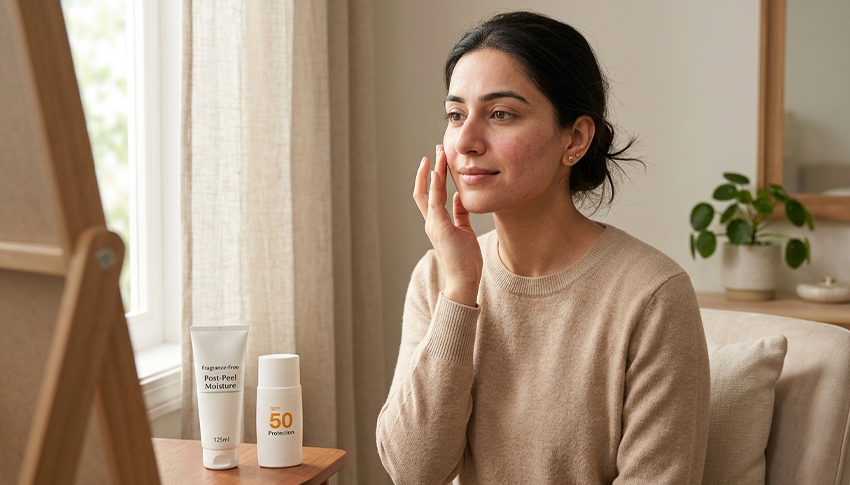
Chemical peels are a wonderful treatment to help improve the texture of the skin, reduce pigmentation, soften fine lines and help achieve a brighter complexion. Although the peel itself is done in the clinic, how you care for your skin afterwards is a major part of your final results. Your skin will renew itself during the recovery process, making it more sensitive and prone to irritation and sun damage. Good aftercare encourages healing and also helps to minimize risk of side effects such as long-lasting redness, pigmentation changes or excessive dryness. Understanding what to do, and what to avoid, can help make your healing process more comfortable and help you get the most from your treatment.
Read this guide to find out more about this.
Ensure Your Skin is Hydrated
One of the primary things you may notice after a chemical peel is that your skin appears tighter and drier than normal. That’s a normal part of recovery. As the older, damaged skin sloughs off, new skin grows underneath. A scent-free, gentle moisturizer suggested by your skincare professional can help regain ease and help strengthen the skin barrier. Hydration is more than just slathering on products, drinking enough water is key to overall skin health. Unless otherwise directed by your dermatologist, avoid products with strong cleansing acids, retinol, alcohol-based toners, or unpleasant fragrances during the recuperation period. A basic skincare routine allows your skin to concentrate its energy on healing instead of unnecessary irritation.
Minimize Sun Exposure
The most significant part of chemical peel maintenance is sun protection. The newly exposed skin is more sensitive to ultraviolet (UV) rays and more likely to develop sunburn or undesirable pigmentation if not adequately protected. Every morning, apply a broad-spectrum sunscreen with a minimum of SPF 30, even if you’re inside most of the day. If you are outdoors, reapply sunscreen as directed on the product label and wear protective clothing, such as a broad-brimmed hat and shades when possible. It is also recommended to avoid long sun exposures to direct sunlight during the first few days after the treatment, especially in the peak UV hours. You should continue to use sunscreen to maintain your results and to reduce the risk of post-inflammatory pigmentation.
Don’t Pick Your Skin
Your skin will heal, and peeling or flaking can start a few days after treatment, according to the depth of the peel. It may be enticing to pull off any loose skin, but this may disrupt with the natural healing process and increase the chances of irritation, infection, or alterations to pigmentation. Let the old skin come off in its own time and in its own way. If your skin is dry or uncomfortable, continue to apply a gentle moisturizer rather than attempt to speed up the peeling process with the use of scrubs or exfoliating products. Everyone’s healing process is a little different, so try not to stress if your peeling doesn’t look like someone else’s. At this point, patience is a virtue and waiting allows for healthier new skin to form without unnecessary disruption.
Avoid Harsh Skincare Products
For the first couple of days post-chemical peel, it’s best to stay away from anything that can additionally irritate your skin. Activities that raise your body temperature (vigorous exercise, steam rooms, saunas or very hot showers) can aggravate redness and sensitivity. Likewise, hold off on facial scrubs, scrubbing brushes, exfoliating acids and other active skincare ingredients until your practitioner says it’s OK to bring them back. Depending on the peel you had, you may even have to wait a little before applying makeup. For the initial stage of healing, your skin usually only needs a mild cleanser, moisturizer and sunscreen. Giving your skin a break from stress helps to encourage a smoother healing process.
Understand When to Get Help
After a few chemical peels, a little redness, dryness, tightness and mild peeling is expected but everyone’s skin recovers at a different pace. What you experience varies with the depth of the peel, your skin type and your own healing response. But some symptoms should not be ignored. If you see severe swelling, blisters fever, or increasing redness as opposed to a gradual improvement, call your skin care professional immediately. These signs could be a complication that needs to be evaluated. Attending any suggested follow-ups gives your dermatologist an opportunity to check on your progress and advise you when to get back to your regular skincare routine or book another treatment.