
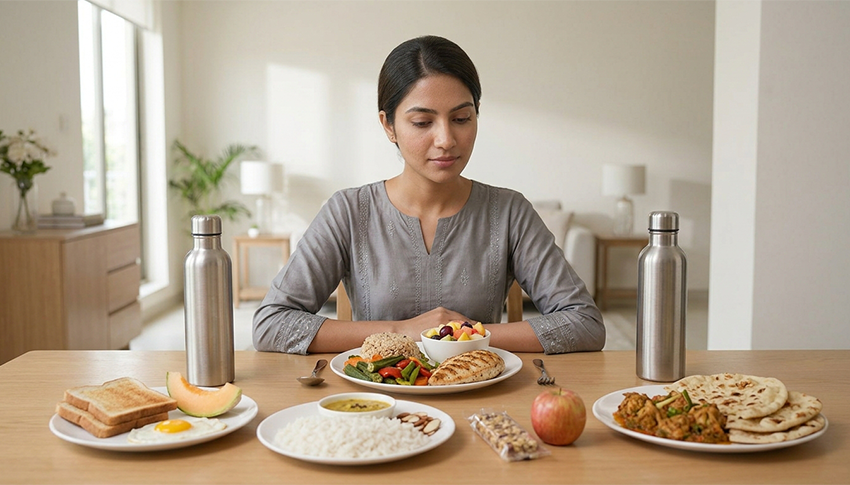
You might think healthy eating is easy, but when it comes to actually understanding the meaning of “eating well,” it can be a little tricky. Everyone has a different idea of what diet to follow; some say low-carb diet is good, while others suggest skipping breakfast, and the social media world has a new diet rule every week. There is a lot of information out there, making it easy to fall into a routine that seems healthy, but isn’t. Eating well does not mean giving up all your favorite foods and living on a perfect diet. It’s the concept of providing the body with sufficient levels of nutrients, energy and diversity over time. Certain mistakes are much more frequent due to good intentions for making healthier food choices. But knowing what they are can help you develop a more balanced approach without over-restriction.
Read this guide to learn more about common nutrition mistakes you must avoid.
Skipping Meals to Eat Less
Skipping meals may seem like an easy way to reduce your overall food intake, especially when you’re trying to lose weight. However, regularly going for long periods without eating can leave you extremely hungry later in the day. This can make it more difficult to make balanced food choices and increase the chances of overeating at the next meal. You may also find yourself reaching for convenient foods because you’re too hungry to think about what would make a satisfying meal. Rather than just eliminating meals, consider how the eating pattern fits into your body and schedule. Some individuals like taking in fewer meals, and others feel better if they take in more frequently. The key is that your diet should be nutritionally sound and fits your lifestyle.
Eliminating Whole Groups of Food
Carbohydrates, fats, and other food groups are often portrayed as something to eliminate when trying to improve your diet. However, eliminating an entire food group is not necessarily a healthier choice. Carbohydrates can be a source of energy, and these are present in foods including whole grains, fruit, vegetables and legumes. Healthy fats are important for normal body functions and are found in foods such as nuts, seeds, avocados, and fish. Rather than labelling an entire category of food as “bad,” consider the quality and quantity of what you’re eating.
Focusing Only on Calories
Calories are important, but they’re not the everything. Two meals may have the same calorie content but vastly different protein, fiber, vitamins, minerals and other nutrient content. While calorie counting is a key part of a low-calorie diet, if you only consider calories, you may find yourself making choices that aren’t based on nutrition. This can leave your meals less satisfying and make it harder to maintain healthy eating habits. Rather, focus on the overall quality of meals. Add protein, vegetables or fruit, whole grains or other carbohydrates, and healthy fats (when suitable). Nutrition should not be just a number.; your energy, fullness, strength, digestion, and wellbeing are important, too.
Not Eating Enough Protein or Fiber
Diet can be “healthy” but lack nutrients. Protein is important for maintaining muscles and can contribute to satiety, fiber is important for good digestion and can help you to feel full after eating. If most of your meals consist primarily of refined carbohydrates or small portions of food, you may not be getting enough of either. Aim to include a variety of foods together in meals, not just one nutrient. Protein may be taken from eggs, milk, fish, meat, or legumes, tofu or other sources. Vegetables, fruits, whole grains, beans, lentils, nuts and seeds are all sources of fiber. Remember, do not calculate every gram or weight to enhance the diet. Just knowing more about these nutrients can help you to make a more balanced meal.
Drinking Too Little Water
Thirst can be mistaken for hunger or it’s easy to forget to drink enough water in a busy day. Hydration is an important part of overall health, and your fluid needs can change depending on factors such as activity level, weather, diet, and individual circumstances. Instead of waiting until you’re extremely thirsty, make drinking water part of your routine. Always carry a bottle with you, drink with meals and listen to your body. Water does not have to be a new and difficult nutrition rule. Making it available at all times of day is a good start, for most people. However, if there is a medical condition that impacts fluid needs, talk to your doctor and follow their instructions to keep yourself hydrated.