
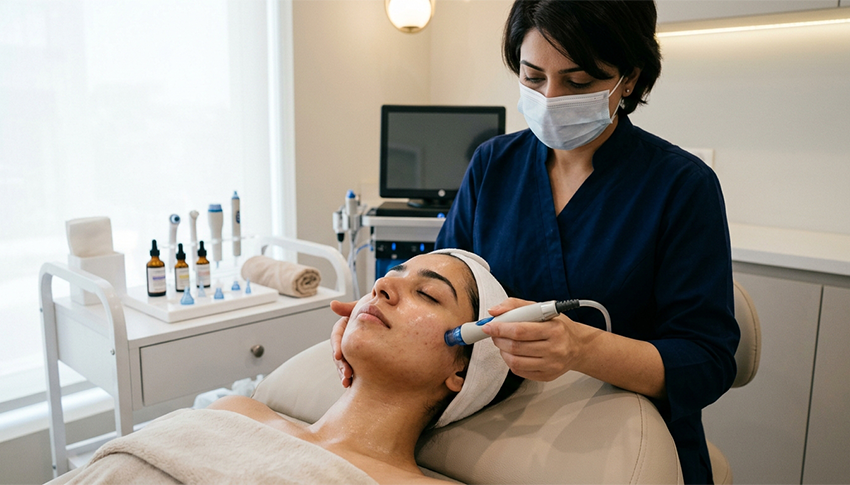
Hydra Facial is already designed as a multi-step treatment that cleanses, exfoliates, extracts impurities, and hydrates the skin. Depending on the treatment plan, it can also be customized with additional options such as boosters, LED light therapy, and lymphatic drainage. One of the add-ons that has gained attention is called lymphatic drainage, which is linked to facial puffiness and sculpted look.
So, what exactly does it bring to a Hydra Facial, and is it something that everyone should have? It depends on what you are looking for in the treatment. Unlike the cleansing, exfoliation, extraction and hydration components of a HydraFacial, the Lymphatic components are used for a different purpose. Knowing about these differences can help you determine if the extra step will benefit your skin or if it is completely superfluous.
Continue reading to learn more about this.
What Is Lymphatic Drainage in a Hydra Facial?
Lymphatic drainage involves a gentle technique designed to stimulate flow of excess fluid in the lymphatic system. During the HydraFacial procedure, the lymphatic step is performed with a gentle suction method instead of a massage technique. The treatment is commonly performed around areas such as the face and jawline. The purpose is different from the main HydraFacial treatment. A typical HydraFacial treatment is mainly about cleaning, exfoliation, extraction, and hydration, with lymphatic drainage being used to treat the temporary puffiness and feeling of fluid retention in the face. This is an important difference because the purpose of lymphatic drainage is not to be another step for exfoliation or hydration; it’s a supplemental method that focuses on a different concern.
What Does Lymphatic Drainage Add to a Hydra Facial?
This add-on is typically selected because of the presence of puffiness. Dermatologists suggest that lymphatic drainage will help to diminish puffiness and provide a more sculpted or lifted look. This can be a worthwhile add-on for a person who usually has a puffy face when they wake up and desires a brighter look before a big event. But remember that this is not to be confused with permanent facial contouring. While temporary “puffiness” can be reduced so that the face looks more defined, this is not the same as altering facial fat, bone structure or permanently lifting facial skin.
Is Lymphatic Drainage the Same as a Hydra Facial?
No, they address different aspects of the treatment. The core HydraFacial is focused on the surface and appearance of the skin. The steps are formulated to cleanse, exfoliate, extract and hydrate with optional addition of boosters based on skin concerns. Lymphatic drainage is targeted more directly at temporary puffiness and fluid movement. This means adding lymphatic drainage does not necessarily make every HydraFacial “better.” It makes the treatment more targeted toward a particular goal. If you are mainly worried about clogged pores, for instance, the extraction and cleansing aspects might be more important to you. Likewise, for those who are thinking primarily about the puffiness on the face, lymphatic drainage might be more appropriate as a supplemental technique.
Who May Benefit from the Lymphatic Drainage Add-On?
This add-on may be particularly appealing to people who experience temporary facial puffiness or want a more refreshed appearance after their treatment. It may also be beneficial if the goal is not merely to achieve a clearer and more radiant complexion, but to temporarily create a more sculpted look around the face, like the cheeks and jawline.
When Is Lymphatic Drainage Not Necessary?
If your primary skin issues are acne, plugged pores, blackheads, dry skin or uneven skin texture, then lymphatic drainage might not be the most relevant add-on. This is because the core steps on HydraFacial and targeted boosters (where applicable) directly addresses these concerns. If you add all the options, you can to a facial, does it automatically make it more effective? The desirable option is to select components that you actually want to enhance. If you have a lot of congestion, for instance, you might need more cleansing and extraction, and if you have more dehydration, you might need more hydration. It doesn’t have to be about what can you add to your skin, it should be what does your skin really needs. A professional consultation can also help to identify if it is suitable and appropriate for you, especially if you have any medical condition.