
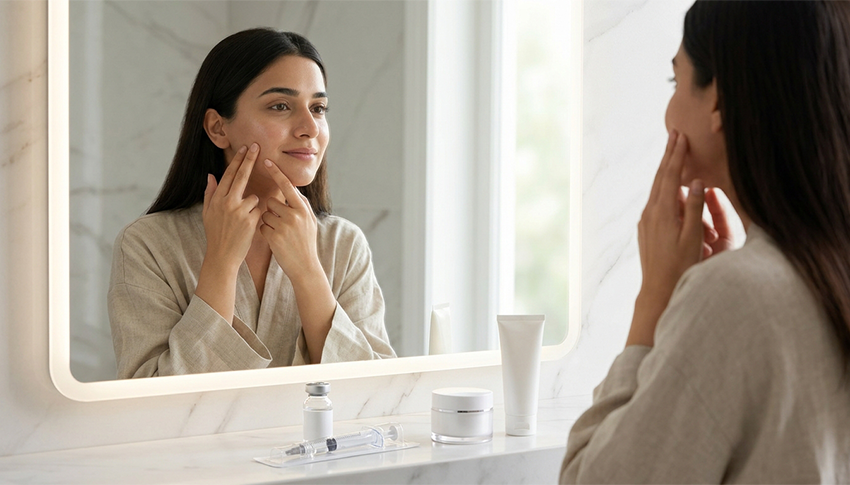
“Glass skin” is one of the most searched skin beauty goals and usually refers to a complexion that is extremely smooth, nourished, clear, even and naturally radiant. That trend has seen whitening injections being promoted as a shortcut to the same glossy, bright look.
But glass skin is more than simply having lighter skin. Skin radiance is affected by many factors such as hydration, skin structure, pigmentation, oil balance and overall skin health. Whitening injections can be part of a skin-whitening plan, but they can’t replace the habits and procedures that help with these other aspects of skin. So, do whitening injections really give you glass skin? They can help some people to have a brighter, more even looking complexion but it depends on your skin type, goals and treatment.
Continue reading to learn more about this.
What Does Glass Skin Mean?
First and foremost, it is important to understand glass skin isn’t a medical term or skin type. It’s a descriptor for skin that looks smoother, more hydrated, moisturized and glowing. The aim is usually an appearance that reflects light and makes the skin look fresh, almost like glass. This appearance is because of a number of different reasons. Uneven pigmentation can make the skin look dull and dehydration can bring out fine lines and rough texture. Congested pores, acne, irritation and even over-dryness can affect how smooth the skin looks as well.
That’s something to keep in mind when considering whitening injections because lightening your complexion is just one part of achieving the full glass-skin look. Focusing solely on skin brightening won’t solve the whole problem if your biggest concern is rough texture or dehydration.
Can Whitening Injections Brighten Your Skin Tone?
The use of whitening injections is one of the esthetic procedures aimed at boosting overall skin radiance and producing a more uniform skin tone. According to the particular formulation and treatment protocol, they can be integrated into a broader approach to skin brightening.
But the point should not be to totally transform your natural skin color. Looking for a drastically different complexion is unrealistic; a realistic goal is to improve the appearance of uneven tone and dullness.
Results also differ from person to person. The change noticed by someone with mild uneven tone will be different from the change noticed by a person with deep dark spots from acne, sun exposure, or other causes.
Can Whitening Injections Minimize Dark Spots?
Whitening injections are not a specific treatment for individual dark spots. Injectables work systemically so they’re not targeting one patch of pigmentation. If you have acne marks, sun-exposed pigmentation or darker areas on your face, these issues may need to be assessed on a case-by-case basis. There are topical products, chemical peels, laser-based procedures and other treatments specifically designed to treat pigmentation. Your dermatologist will recommend one depending on the cause. That doesn’t mean whitening injections can’t be part of an overall skin-brightening plan. It just means they aren’t to be considered a spot treatment. The more precisely the cause of pigmentation is found, the easier it is to choose treatment that effectively deals with it.
Is One Session Enough to Get Whitening Injections?
One session should never be seen as a guaranteed shortcut to glass skin. Skin-brightening procedures are generally tailored to an individual’s needs and everyone sees different visible changes. If you’re expecting a dramatic change right away, you may have unreasonable expectations of what the treatment can do. Your dermatologist should tell you before you begin what the suggested therapy schedule is and what kind of improvement you can realistically expect.
It is also important to differentiate between an immediate post treatment glow and permanent changes to the skin. Temporary things like lighting, hydration, sun exposure, skincare products and other such things can alter the way your skin looks. A better way to judge progress is to compare your skin under similar conditions over time.
Additional Tips to Get Glass Skin
Whitening injections alone probably won’t do the trick for glass-looking skin. A whole skincare routine still counts. It is especially important to use sunscreen every day, because UV rays can cause pigmentation and premature aging of the skin. A mild cleanser washes away excess oil and debris without over-irritating the skin, and a moisturizer helps promote a comfortable, hydrated look. Depending on your concerns, other treatments may also be considered. Those with a high amount of pigment may need targeted pigment treatment, while those with a rough texture can benefit from resurfacing or exfoliating treatments.