
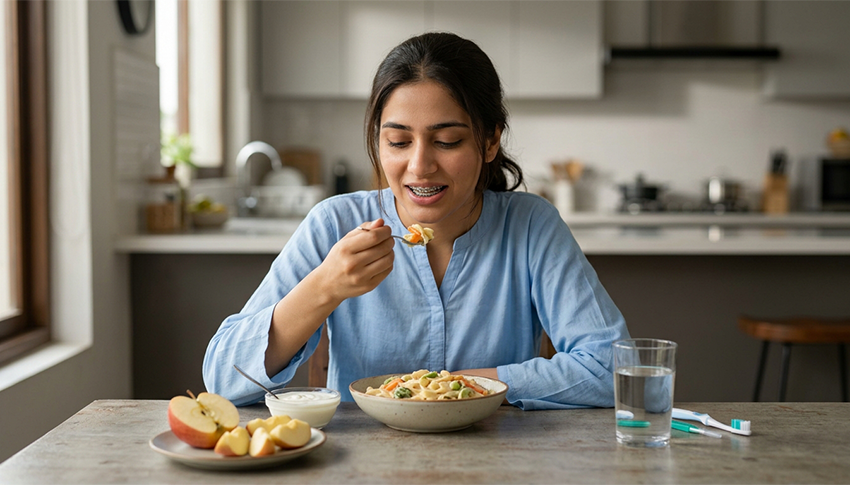
Getting braces changes more than just the appearance of your smile. The first thing you’ll notice is how you eat. Once easy-to-chew foods can make eating difficult, eating may take longer than usual, and some foods may be harder to keep away from the brackets and wires. The good news is that you do not have to completely change your diet for the duration of your orthodontic treatment. Most people only need to be reminded of how to chew, how much to eat and the texture of the food. After this becomes a habit, eating with braces becomes much easier.
Read this guide to learn more about everyday eating changes you may need to make.
What Changes Do You Need to Make to Your Eating Habits?
The first few days are typically the most difficult. You may feel the orthodontic pressure on your teeth as they start to move and feel the pressure of the brackets and wires in your mouth may feel different. During this stage, it’s easier to eat foods that don’t need as much chewing. Eating soft foods like pasta, eggs, yoghurt, rice, soup, mashed potatoes and cooked vegetables can make it easier while you’re getting used to a new diet.
It’s also possible that the chewing may feel slower than normal or that some parts of your mouth may be more sensitive. This is generally temporary. As you get used to your braces, you can start to eat more of a variety of foods, depending on the type of braces you have.
What Food Are Hard to Eat?
Some textures are more difficult to work with when wearing braces. Very hard, crunchy, sticky, or chewy foods can put pressure on brackets and wires or become trapped around them. Examples of foods that can cause issues include hard candies, ice, whole nuts, popcorn kernels, chewing gum, caramel and very chewy sweets. It can also be difficult for some firm foods, like raw apples or carrots, if you bite into them. However, it’s not always necessary to steer clear of any solid food. How you prepare it makes a difference. Slice up food into smaller chunks and bite-sized pieces to make them easier to chew and less stressful for your front brackets.
Do You Need to Change Your Biting Technique?
One of the biggest everyday changes with braces is learning not to use your front teeth to bite into hard or firm foods. Before braces, you might naturally bite directly into an apple, sandwich, burger, or piece of fruit. With brackets attached to your teeth, this can place unnecessary pressure on the appliances. Instead, cut larger foods into smaller pieces and use your back teeth to chew whenever appropriate. This is a very easy adjustment to make that will decrease the force that is directly placed into your brackets. Over time, this is done naturally. While many of the same foods can be consumed as usual, they must be eaten in a new or different way.
What Do You Do When Food Sticks Around Brackets?
One of the most obvious changes is when food is trapped around braces. Even when you eat completely braces-safe foods, small pieces can get stuck between brackets, under wires and around teeth. It is especially important to clean after eating. Brushing and interdental cleaning will remove food participles and rinsing your mouth with water can help loosen the food particles.
It is helpful to have a small orthodontic cleaning kit that you can never leave home without. Having a small orthodontic cleaning kit with you can be helpful when you are at university, work or a restaurant. Using a toothbrush, toothpaste, floss or an interdental brush can improve handling of food throughout the day.
What Should You Do About Snacks and Sugary Foods?
Eating snacks with braces presents a bit more of a challenge since frequent contact with sugary foods can lead to plaque buildup and tooth decay. Brackets can also make it difficult to reach certain spots around the teeth where plaque and food are likely to build up. However, you do not have to completely eliminate treats. The more important consideration is how frequently you consume sugary foods and drinks and whether you clean your teeth afterward. Try to avoid constantly grazing on sweets throughout the day. Drinking water regularly and maintaining good brushing habits can help keep your teeth cleaner throughout orthodontic treatment.