
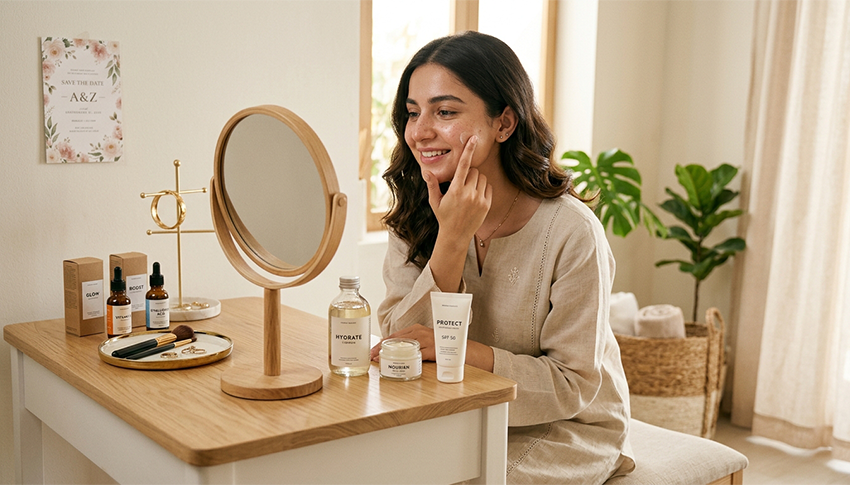
Do you have a wedding, graduation, birthday, or some other important celebration coming up and your regular skincare routine just doesn’t seem to cut it anymore? You may start seeing what you didn’t really see before. Uneven skin color, a few dark spots, rough texture, a dull-looking complexion in photos. Of course, you want your skin to appear its best for the occasion.
This is usually where the skincare shopping starts. You add a new rejuvenating serum, a stronger exfoliant, a high-end moisturizer and perhaps an expert facial to your list. You might want to consider treatments you haven’t tried before.
But here’s the thing. Changing the entire routine at once doesn’t necessarily make your skin better. In fact, testing out too many products or treatments right before a big event is a surefire way to end up with problems you didn’t even have to start with. The smarter way is to know what your skin needs, how much time you have and what shifts are really worth making.
Continue reading to learn more about this.
Why Do You Suddenly Want to Change Your Skincare Routine?
When big events are involved, we tend to highlight our looks. You may be happy with your skincare regimen for months, but then you start to think about professional photographs, make-up, and meeting people you haven’t seen in years. Social media adds another layer of pressure. You see people posting about their before and after skin results, the graduation process, and their pre-wedding beauty make-up. One starts to wonder why not do the same.
But somebody’s skincare regimen might have been worked out over a few months with the assistance of skincare experts. It might not be suitable for your skin if it’s suitable for theirs. Instead of trying to change everything, first narrow your focus to the main concern you wish to tackle.
What Should You Fix First?
First, it’s important to distinguish between problems that bother you and ones that you just want to change. If you have dry skin and often notice flaky spots, for instance, a moisture boost might be your top priority. If lack of even pigmentation is a big issue for you, it might take longer, and you’ll likely need a more specific method. Using a number of unfamiliar products on a regular basis may make it more difficult to find out what causes irritation. However, it will be easier to manage your skincare plan if you select one or two priorities. You don’t have to fix everything you see as a fault before an event. Instead, target changes that are feasible within the time period.
How Much Time Do You Have Before the Event?
Your timeline should influence almost every skincare decision you make. If your event is at least a few months in the future, you can introduce appropriate products slowly and have professional guidance in regard to any ongoing issues. If you only have a few weeks, maybe it is better to concentrate on consistency than starting a new routine. And when your event is right around the corner, it’s usually not a good idea to try anything new if it’s an active ingredient or intense treatment. Remember that the results of skincare products can take weeks or months to show. Some might start to dry or irritate. Knowing this can stop you from hoping for a product that you’ve used only three times to have big effects.
Should You Start Several New Products Together?
It’s difficult to learn how your skin will react if you launch several products at once. Imagine launching the products of a new vitamin C serum, an exfoliating toner, and a retinol product over the course of the same week. If your skin reacts with redness, dryness and sensitivity, how will you know what product caused the reaction? Some active ingredients may also cause irritation when mixed with other ingredients or used too often. It’s a better idea to test one product at a time, using it as directed and seeing how your skin reacts. If you are already using a product that maintains your skin in a comfortable condition, you might not need to use anything in addition.