
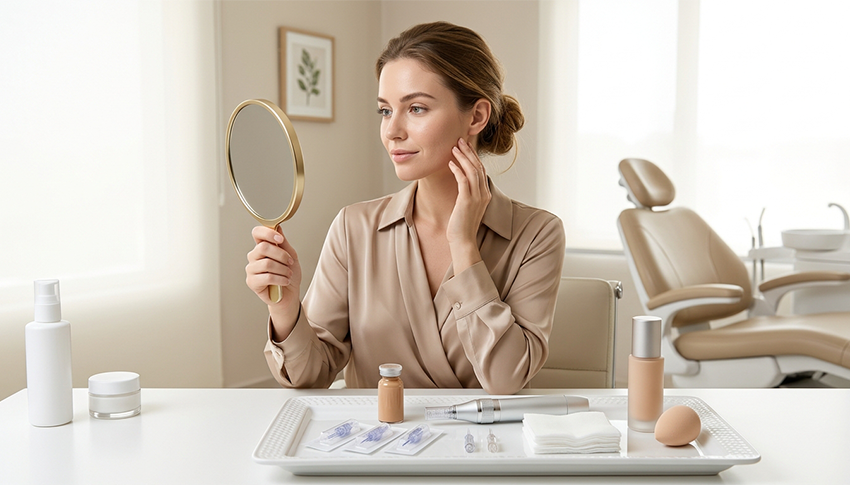
Imagine waking up in the morning and not having to reach for your foundation. No blending. No stress about uneven coverage. No checking to see if your makeup still looks satisfactory half-way through the day. BB Glow promises just that kind of convenience.
Maybe you’ve seen BB Glow videos on TikTok or Instagram where people are sporting smoother, brighter-looking skin colors with a natural, foundation-like finish. For those of you who wear makeup on a daily basis, the thought of waking up with an even skin tone sounds appealing. But there’s a contrast between making your skin look better and what foundation truly does.
Before you decide to go ahead with BB Glow, it’s important to know how the procedure works, what results you can realistically anticipate and whether it can really reduce your reliance on everyday make-up.
Read this guide to learn more about BB Glow treatment.
What Is BB Glow Treatment?
BB Glow is a beauty procedure that involves using a microneedling device to insert pigmentation into the skin. BB Glow aims to achieve an even skin tone, lessen discoloration, and have a slight foundation-like effect. Unlike regular foundations, which remain on the skin and can be removed, BB Glow involves the insertion of color during treatment through precise tiny holes left on the skin.
This is a crucial aspect of BB Glow since it makes it more than just a cosmetic or facial treatment. Dermatologists use different ingredients, techniques, and devices for BB Glow. It also lacks solid clinical evidence regarding its effectiveness and safety. Realizing these facts about BB Glow treatment is essential before opting for the procedure.
Can BB Glow Give You the Same Coverage as Foundation?
With foundation, you can consider the degree of the coverage that you want. You may choose either a lightweight tint for your skin, like a medium coverage foundation to even out the complexion, or, if you want to ensure full coverage, you may choose this for your special occasion.
However, BB Glow treatment does not offer that same level of flexibility. BB Glow may not guarantee the concealing of every concern that foundation is able to temporarily mask, such as angry blemishes, redness, or uneven pigmentation. If you’re seriously considering BB Glow because you wish to stop using foundation altogether, you should know that the procedure may not yield the results you’re envisioning. Remember to clearly express your expectations to a dermatologist to determine whether BB Glow treatment is right for you.
Will Your Skin Look the Same Without Makeup?
What many people love about BB Glow is the idea of waking up with polished skin already. However, skin actually changes throughout the day. Lighting, natural oil production, dryness, and existing skin texture can all affect your complexion look. BB Glow does not shrink pores, does not prevent acne, nor does it give skin a permanently smooth finish.
Even if someone does see an immediate result in the form of a temporary improvement on the skin after treatment, it cannot guarantee that her skin will always appear as if professionally applied with makeup. Also, before-and-after images may seem misleading when lighting, camera settings, or other products differ from photo to photo. What is more useful is to have a realistic expectation than to assume one will wake up with the exact finish showcased in a marketing video.
How Long Does the BB Glow Effect Last?
BB Glow is often marketed as a procedure that provides a foundation-like finish for months at a time. Nonetheless, these claims lack reliable clinical evidence. Any effects associated with pigment could depend on the technique used, the ingredients of the products, and individual skin features. Remember, the pigment fades unevenly and may change as time passes. Unlike regular makeup, one can’t merely wipe off the undesirable outcome. This is especially pertinent if BB Glow is of interest to you because of the idea of a hassle-free way of beauty maintenance.
What Should You Ask Before Booking BB Glow?
If you are considering BB Glow, the first step is to find out the specifics of the procedure. Inquire about the various pigments and active ingredients used, the properties of the products and their approval for dermal use, as well as the clinical evidence in support of the claims made.
You also need to know how qualified the practitioner is, the infection control measures in place, the likely side effects, and what steps are taken in case the results are unsatisfactory. The experience of the dermatologists can be determined by their ability to explain you the risks and drawbacks of the procedure, rather than just show beautiful photos.