
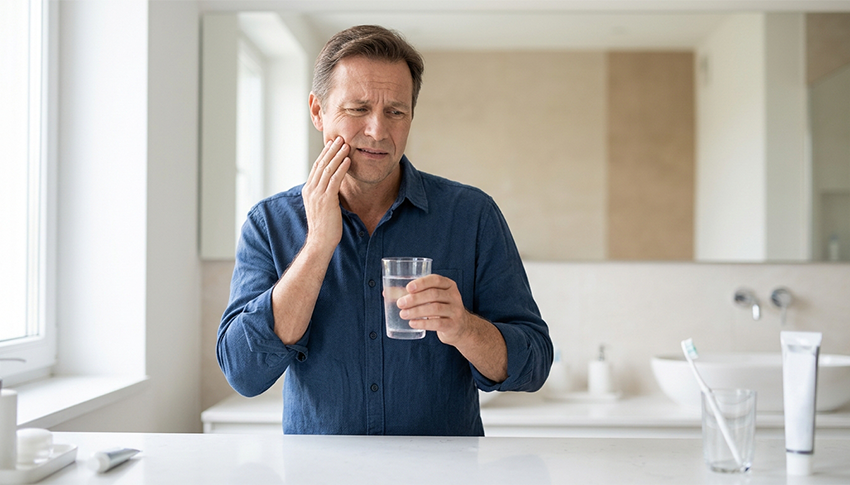
Have you noted that your teeth respond differently to hot coffee, cold water or even sugary foods than they used to? Maybe drinking something cold is now a sudden sharp sensation or brushing specific parts of your mouth is now uncomfortable.
Tooth sensitivity is a common problem that might become more pronounced as you get older. But that is not an inevitable part of growing old. Your teeth’s sensitivity may be affected by changes in your enamel, gums, dental habits, and past dental work. Knowing what is going on in your mouth can help you figure out the cause and when expert dental care is needed.
Continue reading to learn more about this.
Your Gums May Be Receding
One of the common reasons for sensitive teeth with age is gum recession. Your gums normally cover and protect the roots of your teeth. They can, however, gradually wear away from the surface of the tooth, leaving areas unprotected by enamel. The root surface of a tooth is covered with a thin layer of protective tissue called cementum, whereas the visible crown surface of a tooth is covered with a thicker layer. If the dentin beneath the cavity is exposed, it can be penetrated by outside stimuli through small dentinal tubules, which allow them to reach the nerves. That’s why you might feel some pain when you take a cold drink, eat something sweet or brush near the gumline. A dentist can determine if gum recession is making your teeth sensitive and offer a solution. This can include product desensitization, fluoride treatments, and root protection treatments if it is a severe condition.
Old Fillings and Dental Work May Need Attention
Dental procedures performed in the past are not permanent. Each day, fillings, crowns, and other restorations receive the pressures and impacts of regular chewing and over time, their edges can wear, become damaged or experience issues. For instance, an older filling can create a gap in which bacteria can infiltrate, which can cause recurrent decay. Similarly, a damaged crown may expose parts of the underlying tooth, resulting in discomfort or sensitivity. One tooth may be sensitive when biting down or when exposed to hot or cold. This doesn’t automatically mean your previous dental treatment has failed. However, changes in existing restorations deserve attention. A dentist can examine the affected area and determine whether the restoration needs repair, replacement, or further treatment.
Your Tooth Enamel May Be Wearing Down
Enamel is the strong exterior covering that shields teeth from the daily wear and tear, and from environmental conditions. Although it’s the strongest substance in the human body, it doesn’t regenerate once it’s permanently lost. As the years have passed, acidic foods and beverages, excessive brushing, and regular chewing pressure may lead to enamel erosion or wear. As enamel wears down, the dentin is more exposed and your teeth become more sensitive. Eating citrus, carbonated drinks or very hot or very cold food may cause discomfort.
To protect your enamel, avoid brushing aggressively and consider using a fluoride toothpaste. If you consume acidic foods or drinks, rinse your mouth with water afterward and wait approximately 30–60 minutes before brushing. Your dentist can also identify areas of enamel erosion and recommend ways to prevent further damage.
Your Teeth May Have Developed Small Cracks
Teeth are under a lot of pressure every day, especially when you are chewing hard foods. Small cracks may develop over the years due to repeated pressure, accidents, grinding or biting on hard surfaces. Some cracks are difficult to notice because they aren’t always visible during an ordinary examination. They can, however, cause quite a bit of pain if chewed or when taking the bite. Affected teeth can also be sensitive to temperature changes.
Thus, do not ignore a cracked tooth as damage can sometimes continue and reach deeper structures. Treatment options include bonding, dental crowns, or other restorative options depending on where and how severe the condition is. With early assessment, it can be determined if the tooth is salvageable and can avoid more extensive treatment.
When Should You Get Your Teeth Checked?
Occasional sensitivity doesn’t always indicate a serious problem, but persistent or worsening discomfort deserves attention. However, if sensitivity occurs in a specific tooth, or if biting causes pain, or if it persists after applying desensitizing toothpaste, a dental evaluation is warranted. Similarly, if there is no apparent cause for the pain, or if you experience the pain for long periods after eating something that is hot or cold, it may be a sign of a dental issue. The dentist will examine see your teeth, gums and existing restorations and will be able to find out the cause and not just the symptoms, making it easier to recommend a treatment.