
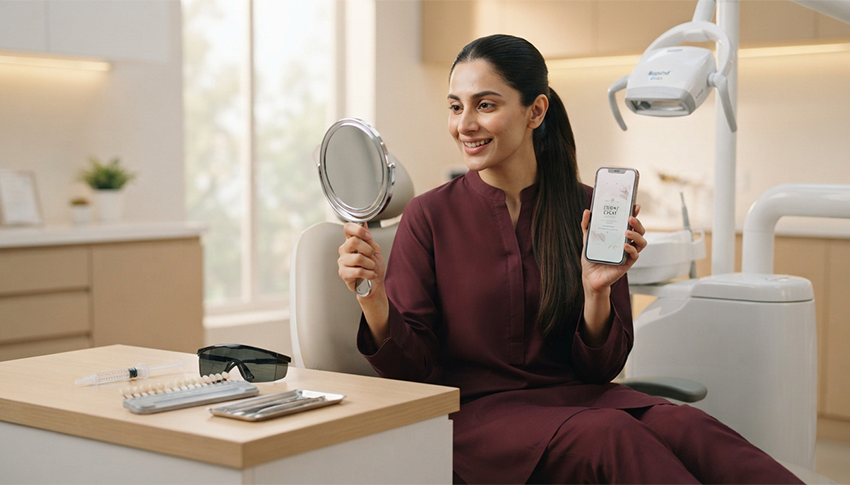
Is it Monday, you’ve got an event on Friday and unexpectedly your teeth appear a little yellower than you recall? Of course, you begin to seek the fastest way to brighten your smile. Whitening strips guarantee visible results, specialized treatments deliver dramatic changes, and social media makes the whole process look surprisingly easy.
But, how much transformation can your teeth go through in a few days? The answer depends on what’s contributing to the discoloration, what whitening technique you choose, and the state of your teeth. Some treatments can lead to rapid significant improvement and others take much longer.
Before booking an appointment or ordering a whitening kit, here’s what you should understand about last-minute teeth whitening.
What is Making Your Teeth Yellow?
Before deciding how to whiten your teeth, consider why they appear discolored. Certain foods, coffee, tea and tobacco can stain the outside surfaces of teeth. They are called external stains. Professional dental cleaning can help eliminate a great deal of this discoloration without bleaching in some cases.
However, teeth may also appear yellow because of their natural structure. Enamel is slightly translucent and causes the underlying dentin to influence tooth color. As enamel becomes thinner with age, teeth may appear darker. Other causes, such as dental trauma or some medications, can cause deeper discoloration. These differences affect the effectiveness of the whitening treatment. However, if your teeth have suddenly turned a different color, a dentist should perform an evaluation on the cause before you try to whiten your teeth
How Quickly Can Teeth Whitening Actually Work?
There are several whitening treatments, and they do not always work as quickly. In-office teeth whitening can sometimes reveal significant results after a single treatment. The treatments usually involve the application of peroxide based bleaching agents in controlled environments. However, the degree of improvement varies between individuals.
Usually, strips and dentist-suggested in-home solutions will function much more slowly. They may need to be applied for several days or weeks, depending on the formulation. There are specific differences in how whitening toothpaste works. Most formulas are aimed at removing stains, but they don’t significantly alter your natural tooth color. If you are expecting a dramatic change on Friday, it is important to have an understanding of these differences. A dentist can help determine whether your preferred timeline is realistic based on your existing tooth color and the treatment available.
What Can a Professional Whitening Appointment Achieve?
Professional whitening could be attractive for those who are aiming for a certain date for their event since they will see the benefits much earlier than some of the home products. First, the dentist will assess your teeth and gums to decide if the bleaching procedure is suitable. A whitening agent is then applied with precautions taken to protect the surrounding soft tissues. Several application cycles may be required for the appointment, depending on the product and treatment regimen.
In some cases, considerable improvement is seen right after the treatment. Others have a mild transformation. Additionally, it’s crucial to be aware that the teeth might have a lighter-looking appearance right after treatment, due to dehydration. They may look slightly different when they rehydrate. Keep in mind that professional whitening does not promise the prospect of a perfect white smile and the shade achieved is partly dependent on the color of your natural teeth.
What About the Days Immediately After Whitening?
Your whitening appointment may be finished, but maintaining your results still requires attention. Over time, tea, coffee, tobacco and other staining agents can cause discoloration. You don’t have to have a strict diet, but if you need the treatments to last, then you should try to limit often using products that stain. Brush your teeth at least twice a day with fluoride toothpaste and floss between your teeth.
Your dentist can recommend an appropriate toothpaste to desensitize or make changes in whitening procedure if you become sensitive. Don’t try out any home remedies or powders that are acidic to keep your new tone. Remember that whitening results aren’t permanent. However, they can surely last for a long time depending on diet, oral hygiene, the natural characteristics of the tooth, and other factors.