
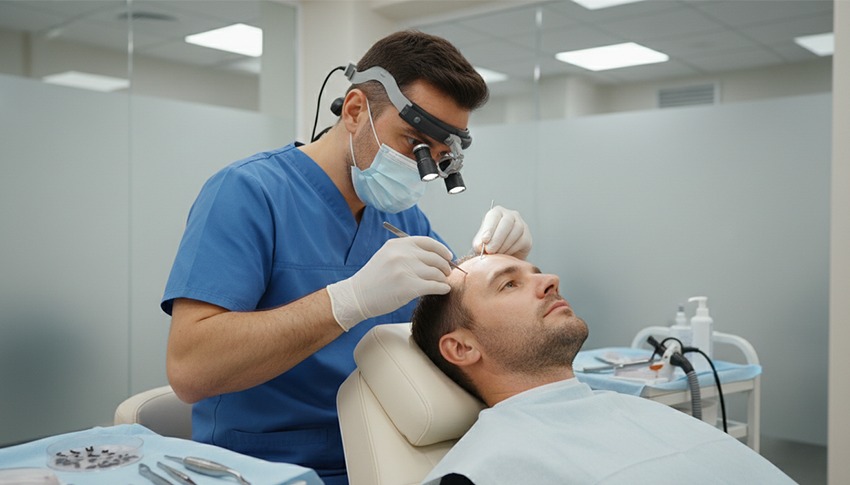
Are you experiencing hair thinning or hair loss problems? Well, you’re not the only one! Many Pakistanis suffer from hair loss problems. This affects people’s appearance and impacts mental well-being, affecting social confidence and self-esteem. As a result, many people find it emotionally challenging to deal with hair loss problems, especially when over-the-counter therapies don’t work. But don’t stress out! We’re here with the perfect hair restoration method: hair transplant the perfect procedure for people who want to regain their confidence and natural hairline.
Continue reading to learn more about hair transplants.
What is Hair Transplant Treatment?
Hair transplant is a popular hair restoration method. It is performed by a surgeon or dermatologist and involves extracting hair follicles from the donor area and implanting them into areas where there is less or no hair. Follicular Unit Extraction (FUE) and Follicular Unit Transplantation (FUT) are the two most popular types of hair transplants. FUE concentrates on removing individual hair follicles, whereas FUT removes a strip of skin containing hair follicles. These transplants are commonly performed in a medical office under local anesthesia. Hair transplants offer natural-looking and permanent results.
Benefits of Hair Transplant
Here are some benefits of hair transplant treatments.
No Scarring
Many clinics use the latest technology and techniques for hair transplant to get remarkable outcomes rather than removing massive hair strips that create noticeable scars. Dermatologists can transfer individual hair follicles with this method, giving you a thicker head of hair without the large, linear scars that other types of hair transplants leave behind. Because FUE extraction sites are extremely tiny (≤ 1mm), any scars that may remain are invisible, allowing you to accomplish this goal. Within days of your treatment, the sites close and heal naturally, leaving almost no scars, so you don’t need stitches or surgical glue!
Reduces Discomfort
Hair transplant is less painful than traditional hair restoration methods, which frequently caused severe agony as your scalp healed following the excision of large strips. To keep you comfortable throughout your procedure, dermatologists use long-acting anesthetics to numb your scalp. Following treatment, the majority of patients just use over-the-counter (OTC) pain relievers, such as ibuprofen or acetaminophen, to relieve any discomfort.
Permanent Results
These days, when your hairline begins to recede and you need to repair it, there are several natural techniques and topical treatments that can help. But you can be certain that nothing compares to a hair transplant as a long-term solution to such a serious problem. These treatments are particularly beneficial for those experiencing severe hair loss and balding regions. You can trust it more because it is a permanent solution to all your hair loss problems!
Little Maintenance
We assure you that you won’t need to put in a lot of work to maintain your hair transplant if it is performed by experienced and skilled dermatologists. You would only need to undertake minimal upkeep after the surgery was completed on the afflicted areas. This is mostly because the transplanted hair functions just like your natural hair. To keep your hair dense, you don’t need to use any particular shampoo or chemicals!
Suitable Candidates for Hair Transplant
Whether you are a good candidate for a transplant procedure depends on a number of important factors, such as:
- Enough healthy hair follicles must be present in donor areas, which are usually the sides and rear of the head.
- Before considering hair transplant treatment, the majority of doctors prefer to wait until hair loss has stabilized with medication. They are generally wary of performing surgery on patients younger than 25.
- It’s critical to weigh the procedure’s possible advantages and disadvantages and keep realistic expectations.
- You must be psychologically and physically well and healthy for hair transplant treatment.
The Procedure of Hair Transplant
Consultation: Your surgeon will assess your hair loss pattern, talk with you about your expectations, and choose the best course of action for your particular scalp condition during the first consultation.
Pre-Procedure Preparation: A few actions must be taken in advance of the surgery. To maximize the results, your surgeon could suggest lifestyle modifications such as modifying your hair care regimen or abstaining from alcohol.
Extraction Phase: Follicular Unit Extraction (FUE) or Follicular Unit Transplantation (FUT) are the two common surgical procedures. Individual hair follicles are removed with FUE, whereas a strip of scalp is removed during FUT.
Graft Implantation: After being extracted, the hair follicles are carefully placed into the areas that are thinning or balding. In order to ensure a smooth transition with existing hair, this is done precisely to resemble the normal growth pattern.