
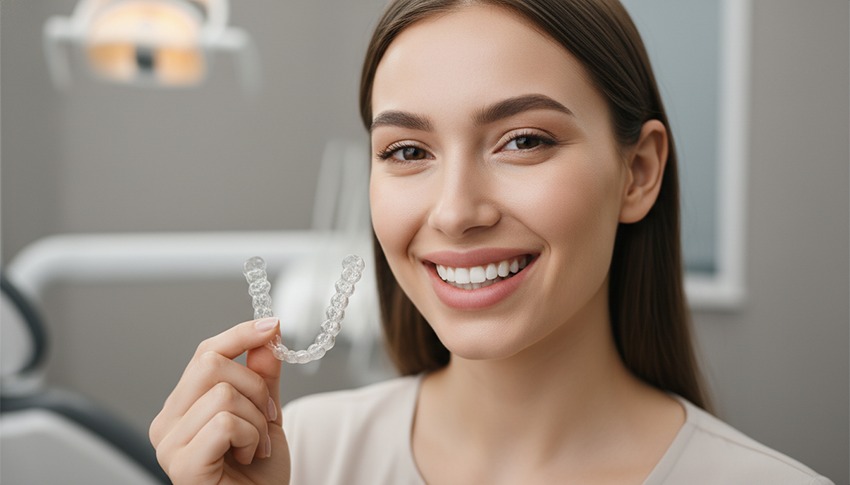
Do you want to get your teeth aligned or straightened, but don’t want to wear uncomfortable metal braces for years? If yes, we’ve got the perfect solution for you: clear aligners! Clear aligners are transparent, customized plastic trays designed to fix teeth alignment problems. Unlike metal braces, clear aligners are comfortable, discreet, and removable. Whether you’re someone who wants to get a confident smile without all the metal wires or a busy professional, clear aligners may be the best choice for you.
Continue reading to know more about clear aligners.
What Are Clear Aligners?
Clear aligners are a contemporary orthodontic procedure that straightens teeth using a set of transparent and detachable aligners. They will be customized according to your teeth and gradually shift your teeth into the proper positions. This procedure straightens your teeth without the need for wires or metal braces. After one to two weeks of use, each aligner will be swapped out for the next in the sequence. Because the aligners are made of soft, smooth plastic, they will fit your teeth tightly. This makes clear aligners a comfortable and discreet choice for individuals who want to straighten their teeth without drawing much attention.
Benefits of Clear Aligners
Here are some benefits of clear aligners.
Aesthetic Appeal: You can discreetly straighten your teeth with the aligners because they are less obvious than traditional braces due to their clear, translucent design.
Comfort: Because transparent aligners are made of smooth plastic, they are typically more comfortable than metal braces and are less likely to irritate your cheeks and gums.
Detachable: In contrast to fixed braces, clear aligners are removable for brushing, eating, and drinking. This function makes it simpler to maintain good dental hygiene and gives you the flexibility to consume the foods you love without any limitations.
How Do Clear Aligners Work?
Here’s how clear aligner treatment may work.
Step 1: Analysis and Consultation
A consultation with an orthodontist or a skilled dentist will be the first step in the process. They will check your teeth and talk about your objectives during this visit. In order to develop a thorough treatment plan, they might take X-rays, pictures, and impressions.
Step 2: Treatment Planning and Digital Mapping
Your orthodontist will make a 3D digital model of your teeth using sophisticated software. This enables them to precisely schedule the motions required to attain the alignment you desire. A visual depiction of how your teeth may change during treatment will be available for you to view.
Step 3: Fabrication of Custom Aligners
Your unique aligners will be made after your treatment plan is complete. The clear, BPA-free material used to make these dental aligners will be absolutely comfortable and nearly undetectable while worn.
Step 4: Wear Your Aligners
A set of aligners will be sent to you, each intended to be worn for roughly ten days. You will be required to wear them during the day and night; you’ll only take them off to eat, drink, brush, and floss. Your teeth will progressively move into the appropriate locations as you go through the sequence of clear aligners.
Step 5: Frequent Checkups
To track your progress, you must see your orthodontist on a regular basis. Adjustments will be made as necessary, and these appointments typically take place every 6 to 8 weeks. To continue the course of treatment, new aligners will be supplied.
Step 6: Upkeep and Follow-Up
Your orthodontist will suggest a retainer to keep your freshly straightened smile after your treatment is over. In order to keep your teeth from moving back to their natural locations, retainers may usually be worn at night.
How to Take Care of Clear Aligners?
Clean Frequently: Every time you remove your aligners, rinse them with lukewarm water. Use a gentle toothbrush and clear antibacterial soap to gently brush them.
Maintain Good Oral Hygiene: Prior to wearing your aligners again, brush and floss your teeth. This keeps food particles from becoming lodged and leading to gum disease or cavities.
Prevent Food and Drink Staining: Remove your aligners before consuming foods or beverages that may cause stains, like curry or coffee. The sole exception is water, where you can keep it.
Keep Them Safe: To avoid loss or damage, always keep your aligners in their case while not in use. It can be useful to have an extra case on hand while you’re away.
Avoid Extreme Temperatures: The plastic in your aligners may distort and lose its fit if you submerge them in extremely hot or cold water.