
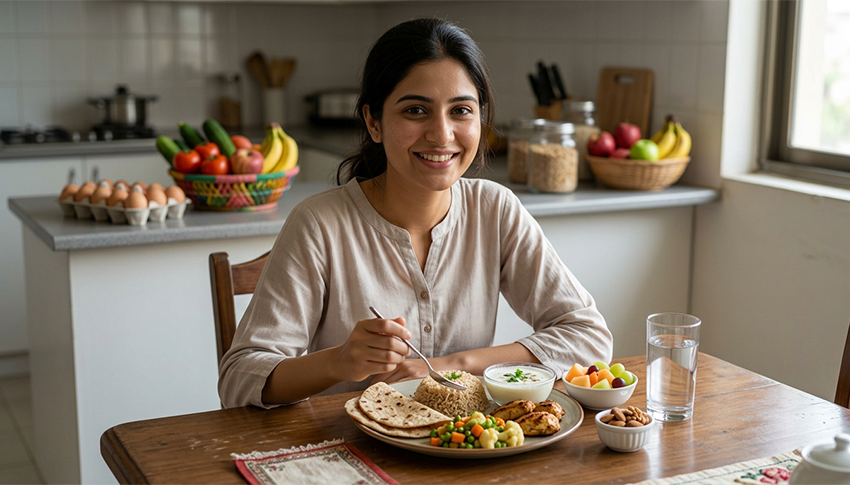
Eating better sounds easy until every meal feels like a decision you have to get just right. How much do you have to eat? Is this a healthy enough meal? Should you steer clear of carbs? Did you eat too much before? With all this constant thinking, eating healthy can feel stressful.
You don’t have to count every calorie, measure every ingredient or follow an ideal meal plan to get better nutrition. Instead, build a few simple habits that make healthy choices easier, without needing continuous decision-making. The goal isn’t for every meal to be perfect. It’s about improving your overall nutritional pattern to be better, more balanced and easier to maintain.
Read this guide to understand how you can eat better without overthinking every meal of the day.
Don’t Run After the “Perfect” Meal
One meal does not define the healthiness of your diet. What is more important is what you typically eat over days and weeks. If you ate a larger breakfast than you intended, you don’t need to make up for it by skipping lunch. Eating dessert after dinner does not mean you’ve undone all your progress. Likewise, having a salad for one meal doesn’t make the rest of your diet healthy.
The idea of “good” versus “bad” food can easily lead to an all or nothing mentality. Instead, consider the overall pattern. Make nutritious foods a regular part of your eating plan, but also allow yourself to enjoy the foods you love. this makes eating much easier to stick to because you are not always trying to comply with rules that are challenging to follow.
Focus on Basic Components
You don’t need a complicated recipe for each plate. Begin by asking whether your meal has an appropriate balance of protein, carbohydrates, veggies or fruit, and some good healthy fat. Eggs, meat, yogurt, chicken, beans, lentils and other protein-rich foods provide protein. Carbohydrates can be rice, roti, whole grains or fruit. Fruit and vegetables add fiber, vitamins and minerals, and sources like nuts and certain oils add dietary fats. Remember, you don’t have to eat the same amount of each category at every meal. The idea is just to not base your diet around one kind of food and ignoring others consistently.
Keep Easy Healthy Foods Available
When the easy option is also the sensible one, eating healthily becomes a lot easier. Stock your home with foods you eat regularly, so you don’t have to make a major decision each time you get hungry. Eggs, vegetables, nuts, frozen vegetables, and other nutritious staples can make putting a meal together easier.
And you don’t have to cook fancy meals every day. You can make a wrap with leftover chicken. Vegetables and eggs can be served with rice. Yogurt and fruit can be a snack on the fly. The easier it is to make a good meal, the less likely you are to resort to whatever is easiest when you are starving.
Don’t Consider Carbs as a Problem
Carbohydrates aren’t inherently unhealthy, and most people don’t need to eliminate them completely. You can include roti, rice, potatoes, oats, bread and fruit in a well-rounded diet. It’s more about the big picture than classifying a whole food group as a substance you should avoid.
If you like rice with your food, you don’t have to switch to something you don’t like just because you are attempting to eat better. Think rather about what you are eating it with. Having a big serving of refined carbs with not much else is a different meal than rice and vegetables and a protein source. You can make the whole meal better without taking away the food you like.
Think About Drinks
It may be easy to eat well but forget about what you drink. Water should be your mainstay every day, but coffee, tea, milk and other drinks can fit into a well-rounded diet. The big thing to watch for is how often high-calorie and sugary drinks replace water or are an automatic part of every meal. You don’t have to give up your favorite beverage. If you habitually sweeten beverages with lots of sugar, syrups or cream, a simple change you can make without drastically altering your diet is to cut back gradually. Small changes that are really sustainable tend to be more helpful than dramatic restrictions.