
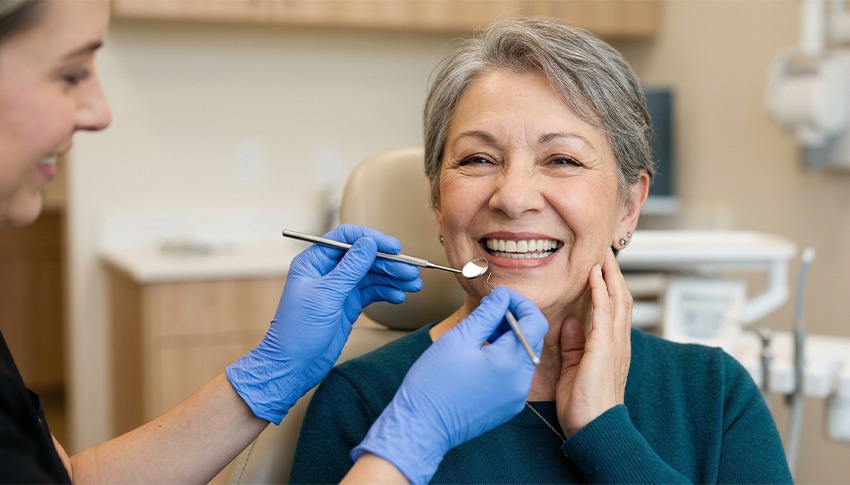
Have you ever looked at yourself and thought, ‘I’ve probably missed my opportunity to get dental implants?’ But that’s not true! A lot of people think that there’s an age limit for getting dental implants; however, age alone is not a barrier to implants. Remember, what matters the most is your bone quality, dedication to oral care and many other factors.
Read this guide to learn more about why dental implants are not just for young people!
Can Older Individuals Get Dental Implants?
Dental implants have no maximum age limit, in contrast to several medical procedures. You might still be a great candidate if you’re in your 50s, 70s, or even 80s. Your health status is more important than your age. Modern implant dentistry offers options like bone grafting, sinus lifts, and improved imaging to make implants viable for patients of all ages.
What Are the Factors That Influence Success in Dental Implants?
Even though age is not a barrier, there are some other factors that are important in dental implantation treatment.
General Health
A patient’s overall health is frequently more significant than their age when it comes to dental implants. The body can withstand minor surgery and recover appropriately if it is in pretty excellent health. However, dental implants are not always impossible due to certain illnesses, such as uncontrolled diabetes, severe osteoporosis, or untreated heart disease, which might increase risks and hinder healing. But, you must remember that many health difficulties can be treated with careful coordination between your dentist and your general practitioner or specialist, enabling patients to safely proceed with implant treatment.
Smoking
One of the most important factors for effective dental implants is smoking, which is frequently more important than age. Nicotine raises the risk of infection, slows down healing, and decreases blood flow to the gums. When compared to non-smokers, this may result in greater implant failure rates. Additionally, smoking hastens the loss of bone, which compromises the durability of implants.
Even cutting back on smoking before and after surgery can improve results; giving up completely is the best course of action. For their oral and overall health, patients who quit smoking frequently have substantially greater success rates, making this lifestyle modification desirable.
Oral Hygiene and Commitment
The individual’s long-term care and dedication are just as important to the success of dental implants as the procedure. Implants need the same, if not higher, oral care requirements as natural teeth, in contrast to dentures, which may be taken out and cleaned separately. Patients must make a commitment to using specialized cleaning tools and brushing and flossing thoroughly every day. Maintaining implant health and avoiding gum disease requires routine examinations and hygienist visits. Because of this dedication, implants are guaranteed to last for many years, safeguarding both the investment in treatment and oral health.
Bone Density
Since the jawbone provides stability for dental implants, sufficient bone density is necessary for their success. Due to aging, tooth loss, or diseases like osteoporosis, some elderly people may have less bone mass. This difficulty is frequently doable, though. While newer treatments like the All-on-4 method use angled implants to maximize accessible bone without extra procedures, techniques like sinus lifts and bone grafting can replace lost bone. Even patients who have lost bone can benefit from dental implants with proper planning.
Why Should You Get Dental Implants Even If You’re Old?
Here’s why dental implants can be beneficial in older ages.
Preservation of Jawbone
Bone resorption, in which the jawbone gradually shrinks as a result of a lack of stimulation from natural tooth roots, is one of the less evident effects of tooth loss. Over time, this may result in a sunken or aged-looking face. Dental implants stimulate and preserve the density of the jawbone by functioning as artificial tooth roots. For elderly patients, this means preventing the premature aging impact that dentures frequently cause and maintaining a more youthful face structure.
Better Durability
Since the jaw’s form changes over time, dentures frequently need to be adjusted, relined, or replaced. On the other hand, if dental implants are properly cared for with regular dental care and good oral hygiene, they can survive for decades. Implants are a more practical and dependable long-term solution for older patients because of their endurance, which results in fewer recurring expenses and repair procedures. It’s an investment in peace of mind as well as dental wellness.
Enhanced Chewing and Nutrition
Individuals wearing traditional dentures frequently have to restrict their diet to softer, less nutritious meals since it might be difficult to eat rougher or crunchier items. This may have an effect on general health, especially as eating a balanced diet becomes more crucial as one grows older. However, you can comfortably eat items like apples, almonds, and lean meats, thanks to dental implants that restore complete biting strength. This flexibility promotes oral and overall health by enabling a more diversified and healthful diet.