
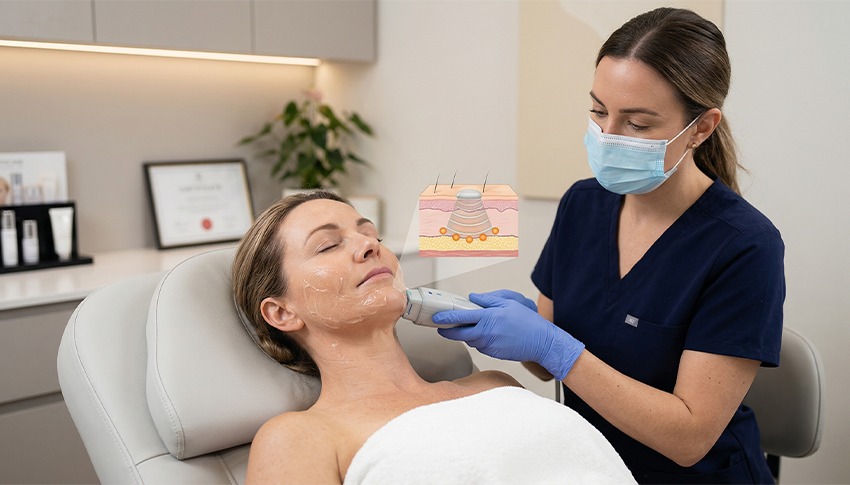
Indeed, High-Intensity Focused Ultrasound (HIFU) is a breakthrough that has become popular amongst many men and women. Even though HIFU treatment holds excellent promise as a non-invasive procedure to uplift and tighten skin, it has also been accompanied by several myths and misconceptions, preventing people from making informed decisions.
But don’t worry, we’ve got you covered. Read this guide to learn more about common myths about HIFU treatment.
HIFU Treatment is Painful
The idea that HIFU treatment is uncomfortable is one of the most common misunderstandings. In reality, HIFU is a non-invasive treatment that targets specific tissues with concentrated ultrasonic waves without giving the patient much discomfort. While some people may feel slight discomfort, the treatment is usually well-tolerated, and neither anesthesia nor sedation is needed.
HIFU Treatment Results Are Instantaneous
Setting reasonable expectations is crucial, even though HIFU is a successful therapeutic approach. It could take some time for the effects of HIFU treatment to become apparent. It takes time for the body to react to the concentrated ultrasonic energy, promote the formation of collagen, and start the healing process. After the treatment, a gradual improvement can be anticipated over a few weeks or months.
HIFU Treatment is Dangerous
Compared to invasive surgical techniques, HIFU treatment is thought to be safe and has a comparatively low risk of consequences. The hazards of open surgery, including bleeding, infection, and a longer recovery period, are eliminated with HIFU because it is a non-invasive procedure. Redness, swelling, or numbness in the treated area are common but transient adverse effects of HIFU treatment that normally go away in a few days.
HIFU is for Older Patients Only
Mature people looking for anti-aging treatments are frequently linked to HIFU treatment. Nonetheless, it is useful and adaptable for adults of different ages. HIFU therapy in the Tweed Valley is customized not only for age but also for specific skin issues and objectives. It is a good choice for people of all ages who want to preserve or restore a young appearance because it works effectively for both early prevention of skin laxity and more noticeable signs of aging.
HIFU is a One-Time Procedure
The ailment being treated and specific patient characteristics determine how many HIFU treatment sessions are needed. While some patients might get the results they want in just one session, others might need several treatments to get the best outcomes. Based on the unique requirements of the patient, the treating physician will choose the best course of action.
HIFU Has Long Recovery Period
HIFU treatment requires minimal to no downtime because it doesn’t require incisions or anesthesia, unlike surgical procedures. After therapy, patients can usually resume their regular activities right away. Mild redness or swelling may occur in some people, but these adverse effects are transient and go away quickly.
HIFU Replaces Surgery
It’s crucial to realize that HIFU treatment does not take the place of surgical treatments like facelifts, even though it offers notable lifting and tightening results. Patients looking for non-surgical ways to lessen mild to moderate skin laxity are most suited for HIFU. It’s a great option for people who want to postpone surgery or improve the outcomes of prior surgeries, providing a non-invasive method of controlling the indications of aging.
How Does HIFU Treatment Work?
- Consultation: Before the treatment starts, you will meet with the skin specialist for consultation. These experts will evaluate your expectations for the treatment. These experts will also assess your overall health, including medical history, skin condition, texture, and type.
- Preparation: After that, you will be required to visit the clinic for treatment. You will be asked to clean your face, removing all dirt, excess oils, debris, and cosmetic products.
- Applying Gel: Depending on the individual’s pain threshold and the particular HIFU equipment being utilized, different numbing drugs may be used on you.
- Marking: To direct the HIFU device’s positioning effectively, the skin specialist will use a special marking pencil or temporary tattoo markers. This will ensure that the ultrasonic energy is precisely targeted to the required skin locations.
- Procedure: The skin specialist will apply a layer of the required gel all over the treatment area. This gel will guarantee optimal skin-HIFU device contact while aiding in the transmission of ultrasonic waves. After that, the HIFU treatment will start. Targeted ultrasonic waves from the HIFU device will heat the tissue under the skin’s surface by penetrating through it to the desired depths.