
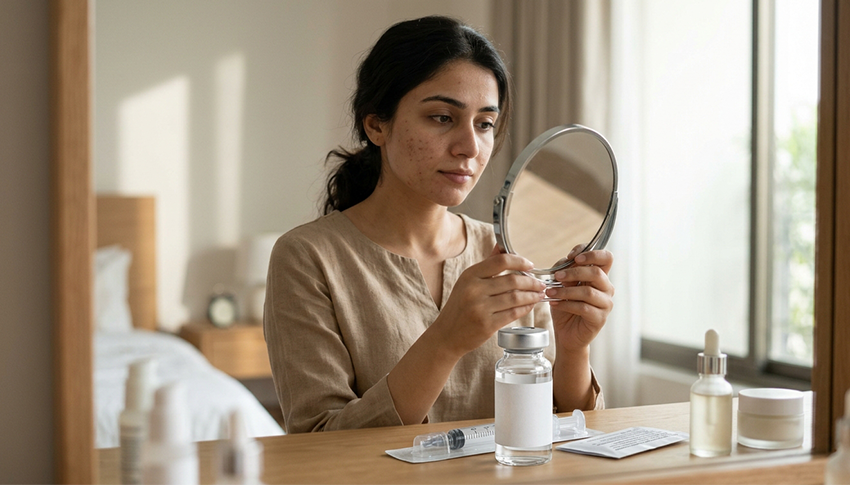
Selecting a treatment for your skin doesn’t necessarily mean selecting a more complicated way to take care of the skin. When facials, chemical peels, laser procedures, skin boosters, and whitening injections are mentioned, people tend to think of treatments that seem to be very attractive merely because the procedures are widely used.
However, just because one procedure seems to fit an older person does not mean it is suitable for younger people. In this regard, the treatment which is particularly beneficial for young people does not necessarily mean it’s inappropriate for older skin. Indeed, your age can play a role in choosing a procedure for your skin, but it shouldn’t be the only factor to consider while making a choice.
Comprehending how the skin develops in time, what problems should be treated by specialists, and what makes a particular procedure effective are the main conditions for obtaining relevant treatments.
Does Your Age Really Determine Which Skin Treatments You Need?
While age matters in skincare, it’s not the only thing that matters. Over the years, your skin texture may change little by little. The rates of oil production, collagen, water content, and skin behavior toward the elements can all vary in the course of a lifetime. However, different people may notice these changes at different ages. Someone may be confronted with pigmentation issues at their twenties, while another individual in their forties may experience hardly any skin issues at all. Genetics, sun exposure, lifestyle, hormones, and skin background may all play a role in how your skin looks. For this reason, one should choose the best treatments according to particular needs.
What Skin Treatments Make Sense in Your Teens?
Teenagers often have skin issues due to hormonal fluctuations, which may include increased oil production and breakouts. At this stage, it is usually advisable to focus on proper skincare practices and address specific concerns rather than opting for cosmetic treatments. In most cases, a good quality cleanser, moisturizer, and sunscreen should be used to keep the skin healthy. In case of prolonged, painful, or battle-scarred acne, consultation with a qualified dermatologist will be needed.
In selected cases, certain treatments may be considered. However, aggressive exfoliation, cosmetic injections, and procedures aimed at altering the natural skin color should not serve as substitutes for proper skin care.
Should You Start Professional Skin Treatments in Your Twenties?
Your twenties often mark the time when you begin exploring different skincare options, such as treatments to help with acne scars or discoloration. You might be drawn to things like facials or chemical peels as your skin begins to change. But just because you are in your twenties does not mean that you have to spend money on different cosmetic procedures. If you are happy with how your skin looks and doesn’t need any specific treatment regarding any issue, proper care may be sufficient. For certain problems, such as post-acne marks, the dermatologist might prescribe particular procedures.
Does Your Skin Type Matter More Than Your Age?
The importance of your skin type and any underlying issues may outweigh your age in numerous situations. For instance, a person with sensitive skin can suffer adverse effects from a strong chemical peel, irrespective of whether they are 25 or 45.
Moreover, someone who is prone to suffer from post-inflammatory hyperpigmentation might need some extra care when opting for a procedure that could cause irritation or inflammation of the skin. Swollen acne, eczema, and certain other diseases can also determine the impact of an in-demand procedure on the patient’s skin. This is why it is necessary for your dermatologist to have a look at your skin type, medications, and previous treatments before starting the procedure.
What Should You Discuss During a Skin Consultation?
Any consultation with a trained expert ought to be more than simply telling you what procedure to choose. Dermatologists evaluate your skin, inquire about skin complaints and analyze medical history. Besides explaining what makes a particular procedure suitable, a specialist should share what results are achievable and whether any treatment is required.
In case one wants to choose several procedures, they ought to find out if they are to combine them or perhaps, they ought to be done separately. An experienced professional should be able to indicate which treatment is not to be made.