
While replacing a missing tooth with an implant is a relatively simple procedure, there is much more involved in the success of implant treatment than just the implant. The jawbone must have sufficient support to keep the implant stable until it is healed and fused to the surrounding bone. As a result, you might ask yourself if your jawbone is still enough for an implant after losing a tooth. Before determining if you’re ready for implants, your dentist will evaluate the condition of the surrounding teeth, gums, and bone. Understanding what dentists look for can help you know what to expect during an implant consultation.
Read this guide to learn more.
Has Your Jawbone Maintained Enough Bone After Tooth Loss?
Once a tooth is gone or missing, the stimulation from chewing that normally occurs in the area becomes absent. As time goes on, the bone may become narrower and shorter. The longer the tooth has been missing, the more significant it will be to evaluate the underlying bone health.
However, the length of time you have been missing a tooth does not automatically mean that you cannot receive an implant. For some, the bone is not completely lost, and it may be possible to simply place an implant whereas for others, the bone is significantly lost. That is why it is important for your dentist to assess the specific area and not just the length of time that the tooth has been missing.
Does the Bone Need to Be Wide and Deep Enough?
A dental implant needs sufficient surrounding bone to provide stability. The amount required depends on factors such as the implant’s position, size, and the anatomy of your jaw. If the bone has narrowed or become too short there simply may not be enough support for easy placement of the implants. This does not necessarily mean that an implant is impossible. Your dentist may recommend a procedure to rebuild or increase the available bone before placing the implant.
Are Your Gums Healthy Enough for Implant Treatment?
Indeed, strong bone is important, but healthy gums are also essential. Gum disease can affect the tissues supporting your teeth and may need to be treated before implant surgery. Your dentist might recommend treatment for active gum disease, bleeding, infection or major periodontal issues first if they exist.
Dental implant treatment should ideally begin once the tissues surrounding the planned implant site are in a healthy condition. This provides the dentist with a more solid basis for the procedure and enables any existing oral health issues to be addressed in advance of potentially affecting the treatment. Once the implant is placed, good gum health is still crucial as the gum tissues around the implant require continuous care.
What If You Do Not Have Enough Bone for an Implant?
Bone loss does not automatically mean that you have to give up on dental implants. Your dentist might suggest a bone graft or another type of bone augmentation depending on the location of the bone loss and how much bone is missing. Bone grafting is the process of adding bone to an area where extra bone support is required. The area may then require healing time before the implant can be inserted. In some cases, the placement of implants can be combined with bone augmentation, or alternatively, the bone preparation can be finished first. Your dentist will decide on the best course of action depending on your scan and the tooth area that is missing.
How Does a Dentist Check the Jawbone’s Condition?
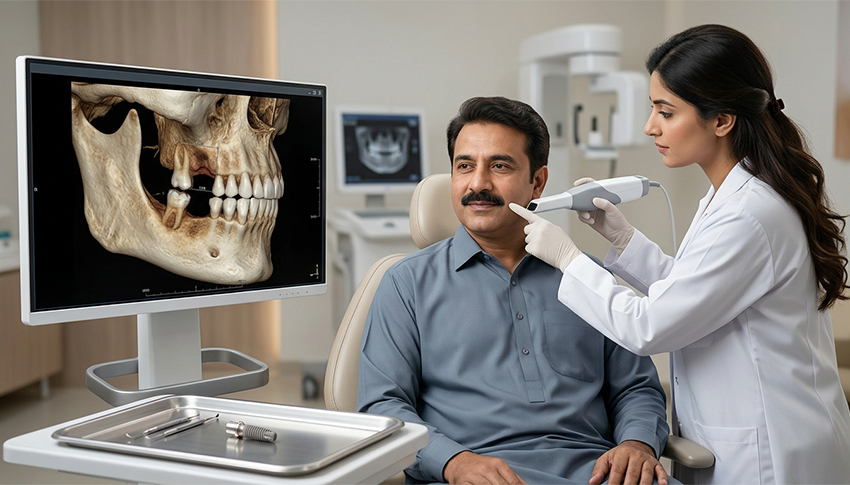
The only way to assess if your jaw can hold an implant is through a thorough visual examination. Your dentist will examine the bone under the gum using dental imaging. The 3D dental scan can reveal comprehensive details regarding the height, width, and form of the bone available. It can also help the dentist identify important anatomical structures that need to be avoided when positioning the implant. This type of imaging lets your dentist plan your implant based on your own jaw, not one of the standard types. A scan is, therefore, an essential component in determining if your jaw is ready and what treatment might be necessary.
What Happens If Your Jaw Is Not Ready Yet?
If your dentist tells you that your jaw is not currently suitable for implant placement, it does not necessarily mean the treatment ends there. Before you proceed, you might need to treat gum disease, manage an infection, give an extraction area time to heal or have a bone graft performed. Your dentist can provide information about which step to proceed with first and how long the healing period may be. Remember, attempting to place implants immediately when surrounding tissues are not prepared can be a potential unnecessary problem. A well-prepared site can be a key element in successful implant treatment, not an unnecessary delay!