
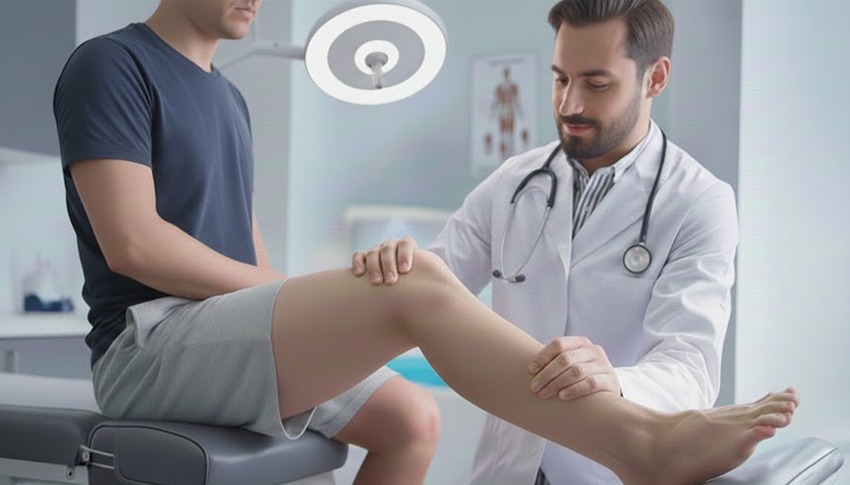
Have you noticed a little stiffness after a long walk or some persistent swelling around your knees? Even though it may seem like a minor discomfort right now, it may grow into long-term problems that have a big influence on your day-to-day activities, making it vital to get professional attention and knee pain treatment. But you may wonder, ‘How do I know if my knee pain is serious?’ Read this guide to learn more about the signs of knee pain and how to get knee pain treatment.
What is Knee Pain?
Knee pain is a common ailment with several potential reasons. The knee is a complicated joint composed of tendons, ligaments, cartilage, and bones that cooperate to offer support and stability. This complex system can be negatively impacted by aging, degenerative disorders, traumas, and overuse.
Here are some causes of knee pain.
Bone, cartilage, ligaments, and fluid make up your knee joint. The knee joint moves with the assistance of muscles and tendons. You may experience knee joint pain and issues when any of these structures are harmed.
Osteoarthritis: The knee’s cartilage progressively deteriorates.
Rheumatoid arthritis: Cartilage may be destroyed, and the knee may swell.
Tendon damage: These might be anything from irritation to a tear, most usually caused by a fall or excessive sports use.
Injury to the ligaments: An abrupt twisting action is typically the cause of anterior cruciate ligament (ACL) damage. The majority of posterior cruciate ligament (PCL) injuries are brought on by direct impacts, such as those sustained in sports or auto accidents.
Meniscus tear: A tear in the meniscus may result from activities that cause you to rotate or twist your knee like sudden stops. A tear in the meniscus may cause pain and swelling around the knee, which must be treated with the best knee pain treatment.
Fractured kneecap: Usually, a fall or a direct hit to the knee causes the patella, a tiny, spherical bone that rests over the front of the knee joint, to break.
9 Signs You Need Knee Pain Treatment
So how can you determine whether it’s appropriate to think about getting treatment done? The following are some of the most obvious indicators that knee pain treatment is necessary:
Persistent, Unrelenting Pain
It’s a clear sign that something more severe is happening if your knee pain persists in spite of rest, medication, and physical therapy. If persistent pain persists for more than a few months, there may be underlying structural damage, making it important to get appropriate knee pain treatment.
Restricted Mobility
You may have advanced joint problems if you have trouble bending, straightening, or rotating your knee. One of the most obvious indicators that you require knee pain treatment is if you find yourself avoiding stairs, having trouble getting in and out of chairs, or restricting your activities.
You Hear Noises like Popping or Grinding
Crepitus, another name for a grinding feeling, may indicate a lack of cartilage. Frequent popping, crunching, or clicking noises could be a sign that surgery is necessary.
Instability of the Knee
Does your knee ever feel unsteady or give out? This instability may be a sign of severe arthritis or ligament damage, both of which might cause more harm if knee pain treatment is not performed.
Contact Between Bones
One of the clear indicators that you require knee pain treatment is an X-ray showing that your knee joint has completely lost cartilage and now shows bone-on-bone contact. Usually, this leads to excruciating pain and restricted movement, making it vital to consult a doctor and get treatment.
Knee Deformity That Is Visible
Advanced degeneration may be indicated by bowing of the leg, swelling that alters the knee’s shape, or a visible deformity. Surgical correction is frequently necessary for these structural alterations.
You’re Losing Out on Life
It’s time to rethink if your knee pain prevents you from engaging in regular activities, such as playing with your grandchildren, gardening, or walking your dog. Life quality is important.
Pain That Prevents You from Sleeping
Your general health and well-being are being negatively impacted if knee pain keeps you up at night or prevents you from falling asleep. In such cases, knee pain treatment may be necessary if the pain persists at night.
You Take Painkillers Every Day
Taking prescription or over-the-counter drugs on a daily basis to get through your routine is a red flag. Long-term usage of these medications doesn’t treat the underlying source of your pain and may have harmful side effects. Thus, consult a professional and get the best knee pain treatment.