
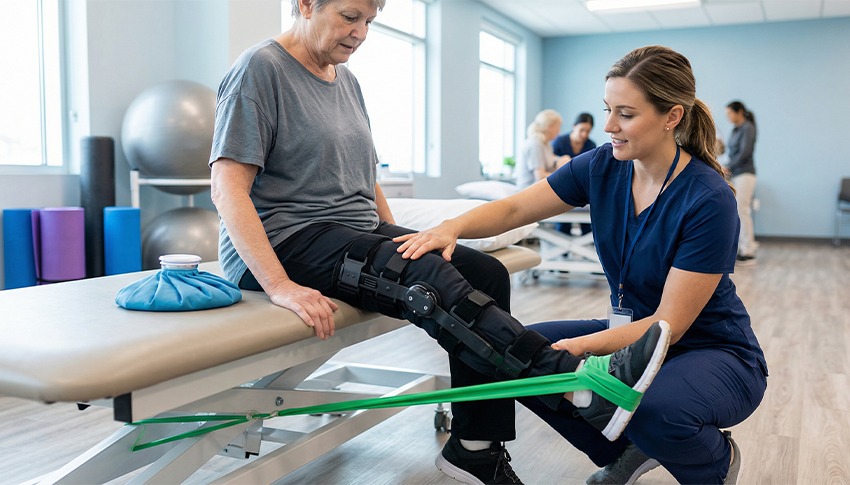
Have you recently undergone knee pain treatment? Recovering from a knee injury can be an overwhelming journey. However, a key component of successfully managing your recovery is being aware of what to anticipate along the way. In fact, the fear and frustration that can accompany this kind of injury can be reduced by knowing the process and setting expectations early on. By taking a deliberate approach to your recovery, you can minimize setbacks and persistent pain and confidently resume your usual activities!
Therefore, read this guide to learn more about recovery after knee pain treatment.
Overview of Knee Pain Treatment Recovery
There are several types of knee injuries, and each one needs a different healing strategy. Ligament tears, such as ACL injuries, meniscus tears, or simple strains that may occur during physical activity or even from an unanticipated twist or tumble, are common forms. It is essential to obtain a precise diagnosis from experts who specialize in knee care because the course of recovery and therapy may vary depending on the type of injury.
A medical evaluation by medical professionals is typically the first step when you begin to experience knee pain. In order to provide a comprehensive picture of the injury, this frequently entails a physical examination and may involve imaging procedures like MRIs or X-rays. This not only aids in identifying the precise issue, but it also enables the medical staff to develop a successful knee pain treatment strategy that is customized to your unique requirements.
Visiting a professional clinic plays a crucial role in giving a precise diagnosis and a variety of treatment alternatives. In addition to providing medical evaluations, these clinics offer all-inclusive regimens that combine medical care with lifestyle modifications, guaranteeing a comprehensive approach to recovery. Getting professional help can have a significant impact on how quickly you recover and resume your regular activities.
After all, you don’t want to deal with knee issues on your own, and knowing the fundamentals can help you get started. The process of recovering after an injury becomes easier to understand and more manageable with the correct advice!
Recovery Timeline
Setting reasonable expectations might be aided by being aware of the many phases involved in the healing process following a knee pain treatment. The time frame might differ greatly depending on the kind of injury, such as a sprain, tear, or fracture. Here’s what recovery may look like after knee pain treatment:
- Initial Rest and Healing: Pain management and knee rest are frequently the focus of the first several weeks. In order to prevent placing weight on the injury, this stage may involve cooling, elevation, and even the use of crutches.
- Rehabilitation and Strengthening: A planned rehabilitation program begins as soon as the swelling goes down and the acute pain goes away. Physical therapy may be used to increase flexibility, strength, and mobility. Here, exercises like light stretching and building up the surrounding muscles are really important.
- Gradual Return to Activities: Daily and recreational activities can be incorporated as recovery advances. To avoid setbacks, it’s critical to adhere to a customized plan that guarantees activities are resumed gradually.
What Should You Expect During Rehabilitation?
You should anticipate a variety of knee pain treatments and activities aimed at rehabilitating your knee. Exercises that progressively increase in intensity are frequently the main focus of physical therapy.
- Exercises for balance: To increase stability and guard against further injuries
- Range of Motion Exercises: To restore your knee’s natural range of motion
- Strength training: concentrating on knee-supporting and knee-protecting muscles
Remember, it’s crucial to maintain motivation during this stage. It’s normal to feel tired or sore, especially at the beginning, but persistence is essential. Setting modest, doable goals and maintaining a rehab notebook to record progress are two strategies for staying on course.
How to Maintain Knee Pain Treatment Results?
Ensuring long-term stability and strength is equally as important as managing problems when it comes to maintaining knee health. Adopting habits that maintain the health of your knees will help you avoid further injuries:
- Regular Exercise: To maintain healthy joints without overtaxing them, try low-impact exercises like cycling or swimming.
- Protective Gear: If you’ve already been injured, using knee support or braces during sports can provide an additional layer of protection.
- Weight management: By keeping a healthy weight, you can lessen the strain on your knees and lower your risk of injury.