
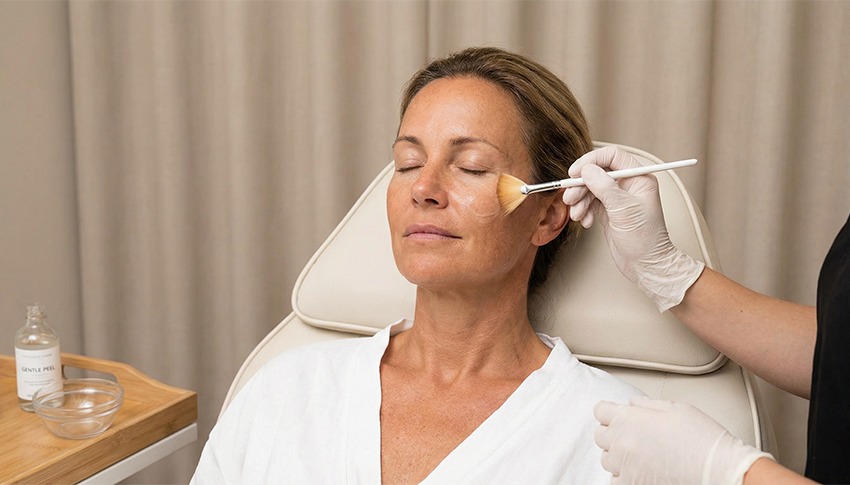
Are you looking for a non-surgical treatment that clears congestion, brightens dull skin, and leaves your complexion smoother, softer, and fresher? If yes, a chemical peel is exactly what you need! By peeling the outermost layer and eliminating dead skin cells, chemical peel treatment will result in newer, fresher, and brighter skin just after one session!
Continue reading to know more about chemical peels.
What is a Chemical Peel?
Chemical peels are cosmetic procedures that smooth and improve the texture of the skin by using a chemical solution that eventually causes the dead skin to slough off. Compared to the old skin, the regenerated skin is usually smoother, less wrinkled, and more uniform in tone and color. Chemical peels come in different types: superficial peels utilize mild acids like alpha-hydroxy acid, whereas medium and deep peels employ harsher acids like phenol or trichloroacetic acid.
Are There Different Types of Chemical Peels?
Yes, there are different types of chemical peels.
Superficial Peels
This type of chemical peel is the mildest and gentlest as it merely removes the epidermis, the skin’s outermost layer. Superficial peels, which usually use alpha hydroxy acid, are excellent for minor skin problems, including fine wrinkles, uneven tone, or rough texture. You’ll probably only get a little redness or minimal peeling because they are so mild on the skin.
This is a gentle option that won’t interfere much with your normal routine if you’re seeking quick skin rejuvenation. You may usually receive a superficial chemical peel every two to five
weeks, depending on how sensitive your skin is. This recuperation period is essential to prevent
over-exfoliating your skin.
Medium Peels
Medium chemical peels penetrate further, affecting the upper layers of the dermis as well as
the epidermis. Stronger and more powerful acids, such as glycolic acid, are frequently used in
these peels. These chemical peels help cure skin issues that originate in the dermis, such as sun
damage, acne scars, and deeper wrinkles, because they penetrate deeper into the skin.
Your skin may take one to two weeks to heal, with significantly more peeling, redness, and
sensitivity during that time, even though the benefits are more obvious. The whole healing
process can take three to six months, and careful attention is necessary to prevent skin damage,
even though the side effects can only last a few weeks.
Deep Peel
The strongest chemical peels are deep peels. They may make your skin vulnerable and take a
long time to heal because they thoroughly penetrate the dermis and cause significant skin
resurfacing. At the same time, these peels’ depth enables them to address skin issues like
severe sun damage and scarring. However, because of their depth, these deep peels may have
adverse effects such as pigmentation alterations and scarring. Because of this, they are riskier
procedures that should only be carried out by skilled plastic surgeons or dermatologists.
What to Expect During Chemical Peels?
To find the optimal course of action for your skin type and issues, a consultation is the first step
in the chemical peel process. The process involves cleaning the skin and applying the chemical
solution for a predetermined amount of time. Patients may experience slight warmth or
tingling. To promote the best possible healing, post-procedure care recommendations are given
once the solution is removed. Smoother, fresher, and more youthful skin is the end result,
though recovery timeframes vary based on the depth of the peel.
Who Should Get Chemical Peels?
Chemical peels are appropriate for people who want to enhance the texture, tone, and general
appearance of their skin. They deal with issues like sun damage, hyperpigmentation, fine
wrinkles, and acne scars. While most skin types can benefit, those with certain disorders,
including eczema or cystic acne, should first speak with a physician. Safe and efficient outcomes
are ensured by tailoring the peel to each person’s skin type.
Common Myths About Chemical Peels
Contrary to popular belief, chemical peels are not unpleasant or dangerous. Peels are a safe and
efficient approach to treating skin issues when done by qualified specialists. Furthermore,
chemical peels aren’t limited to aged skin, unlike what many people think. By learning about the
procedure, you can debunk these misconceptions and more easily accept the advantages of
chemical peels.