
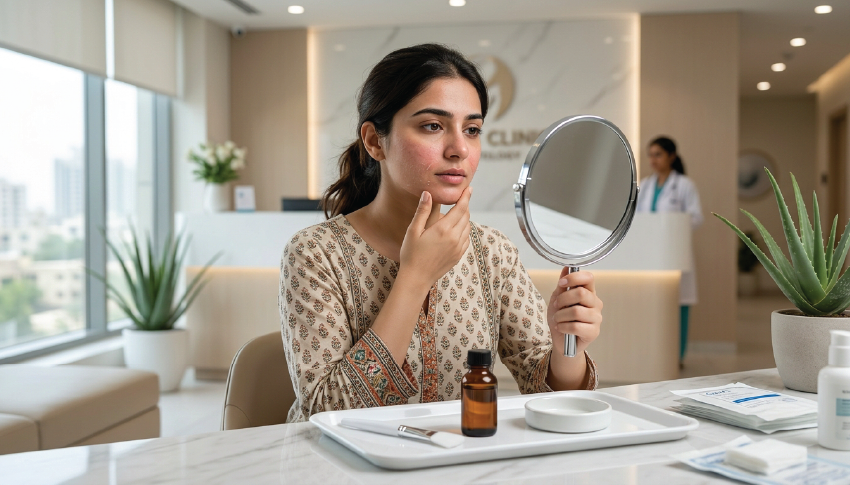
When you get a chemical peel, it’s typically with a view that your skin will appear smoother, more radiant, and more even. So, when your skin looks worse after treatment it can be easy to think that something has gone wrong. You may notice redness, a lack of moisture, flaking, tightening, temporary breakouts or more obvious pigmentation before the skin starts to look better.
This is not always a sign of a failure of the chemical peel. A peel is formulated to initiate a regulated process of peeling and skin renewal, and the skin may appear different as it heals. But not all reactions are to be dismissed. Your recovery depends on the type and strength of the peel, the health of your skin before treatment, your skincare routine and how you care for your skin following treatment.
Knowing what can happen following a chemical peel can help you avoid unneeded stress and know when something truly needs to be checked.
Why May Your Skin Look Worse Immediately After a Chemical Peel?
The first few days post-peel may be the least indicative of your expected results. Your skin may be red, tight, dry and rough, according to the type and strength of the peel. Some people get noticeable flaking and some very little peeling. Your skin may also be more sensitive or uneven for a while.
This is because the outer layers of your skin are being affected by the treatment and your skin is undergoing recovery. The immediate appearance, thus, should not be taken as the test of the ultimate result. So, the final outcome should not be judged by its immediate appearance. A chemical peel is not meant to give you perfect skin right after your appointment.
Can Dryness and Flaking Make Your Skin Look Duller?
Yes. Short-term dryness may make your skin appear dull, rough or less than radiant. On the renewal of the skin, parts that are typically smooth may feel a bit rough or tight as the skin sheds. Flaking can also make makeup sit unevenly on the skin making imperfections more noticeable. Some people may want to do self-exfoliation to accelerate the process, but this can cause unnecessary irritation. Your skin will usually heal on its own over time, not the result of further intensive scrubbing. Gentle cleansing, appropriate moisturizing, and following the aftercare instructions provided by your best dermatologist are usually more useful during this stage.
Why is Pigmentation More Visible After Peel?
During the recovery period, pigmentation may be more prominent or darker. That does not mean that the pigmentation has been permanently worsened. How the pigmentation appears will be affected by changes to the skin’s surface, dryness, inflammation and the way light reflects from the recovered skin. But precautions must be taken with pigmentation, particularly for individuals who tend to experience post-inflammatory hyper pigmentation. Remember that sun exposure following treatment also can hinder healing and cause unwanted darkening. That’s why sun protection should be seen not as an add-on to the chemical peel treatment regime, but as a mandatory component.
Can You Break Out After a Chemical Peel?
Treatment may result in minor outbreaks or skin changes in some individuals. This may be due to a variety of factors, such as short duration of irritation, disruption of the skin barrier, products used during recovery, or susceptibility to acne. Not every post-treatment breakout means the peel has caused permanent acne or that the treatment was unsuitable. Yet, when breakouts continue or get worse, it should not be taken for granted. Before introducing new acne products or treatments, or exfoliating, consult your practitioner if you are having severe acne issues after a peel. Your skin might need a more basic regimen during the settling in period.
When Can You Expect Your Skin to Look Better?
There is no general timeframe. Superficial peel recovery is fairly quick, and stronger peels may take longer to recover. Over time, your skin may look smoother, more comfortable, and over time, you will see a gradual improvement in your pigmentation, color or overall brightness. That is why you should determine your progress over time instead of checking your skin many times during the first few days. Your practitioner can also give you an indication of when to assess the outcome and if another treatment will ever be suitable.