
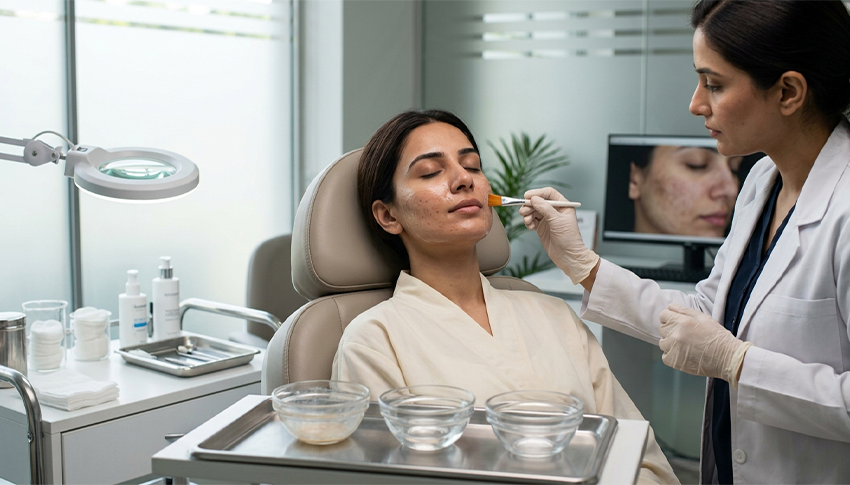
A chemical peel is great for dullness, uneven skin tone, rough appearance, acne and some pigmentation however, one treatment does not always give you the full result you are looking for. This is because chemical peels work to encourage controlled superficial exfoliation and renewal of the skin, and many problems develop progressively and can involve several layers of skin. The outcome depends on the type and degree of strength of the peel, the problem being treated, and how an individual’s skin reacts. Some people notice a noticeable difference after one session, whereas others may require a series of treatments with appropriate spacing between them. Thus, it’s important to understand the benefits of getting multiple chemical peels.
Read this guide to learn more about this.
Developing Skin Concerns
Most of the problems people want to address with chemical peels don’t happen overnight. Pigmentation can develop slowly following prolonged sun exposure or inflammatory processes, whereas acne, uneven texture and signs of aging can linger for months or years. One treatment can improve the surface look of the skin, but deeper or persistent issues can take longer to respond. That’s why a skin specialist may offer a treatment plan instead of guaranteeing that one peel will entirely treat a concern. The goal typically involves gradual improvement, rather than trying to change the skin dramatically in one session. Your skin’s reaction will also be determined by the type and extent of the concern and your unique skin characteristics.
Different Peels Target Different Problems
Chemical peels don’t all work exactly similarly. Various formulations and strengths are chosen based on the individual’s skin condition and treatment goals. The peel you select to correct dullness of the surface may not be the same one you select for acne or pigmentation. The results may differ according to the concentration, ingredients, technique of use and depth of treatment. This is why the most aggressive peel possible isn’t always the best option. A dermatologist may start with a gentler treatment and see how your skin responds before suggesting further sessions. Sometimes a well-chosen series of treatments can give more predictable improvement than trying to do everything with one aggressive peel.
Results Are Gradual
Chemical peels may result in visible changes in a short period of time, but not all benefits are immediate. The skin may exfoliate and renew itself after treatment before the final result becomes more evident. Therefore, changes in texture, brightness or pigmentation may occur gradually. With recurrent treatments, a medical professional may be able to build on the enhancement achieved during previous sessions, allowing adequate recovery time among appointments. This slow process also allows you to better monitor your skin’s reaction and modify the treatment if needed. Don’t expect dramatic results after one session, as this can lead to unhappiness or a desire to repeat the procedure too soon.
Acne and Texture Require Continuous Treatments
Chemical peels can be a part of an acne treatment plan for certain kinds of acne and uneven texture, but a single treatment may not take care of all the factors involved. Oil production, blocked pores, inflammatory processes, hormonal influences, or other factors continue to contribute to acne development. Likewise, uneven texture can be caused by acne scarring, sun damage or aging changes. While a peel can help improve the appearance of the skin, it won’t necessarily prevent new acne from forming or completely remove established acne scars in one treatment. A specialist may suggest multiple sessions along with suitable home care or additional professional treatments, depending on your skin. The aim is to improve the overall health of the skin gradually, rather than hoping that one procedure will address all concerns simultaneously.
Your Skin Needs Time to Heal
When a series of chemical peels are suggested, the treatments are typically spaced out to allow the skin to heal. The exact time frame will depend on the type of peel, the intensity of the peel, your skin’s response to the peel, and the issue that is being treated. Too close together does not always increase the speed of results. However, if you over-exfoliate the skin before it has had time to recover, it can lead to increased irritation and a compromised skin barrier. If you experience prolonged redness, burning, extreme dryness, or significant sensitivity, these are signs that you should discuss with your skin specialist prior to another treatment is done. A personalized schedule enables your healthcare professional to evaluate your reaction after each session and decide if another treatment is necessary.